Medium Term Financial Plan 2026 - 2031
Published March 2026 An accessible strategy document from southtyneside.gov.uk
Foreword
This Medium Term Financial Plan (MTFP) is our strategic financial plan incorporating the priorities for investment for the Council and the community.
We are now entering year four of our 20-year vision for South Tyneside to be a place where people live healthy, happy, and fulfilled lives.
We have a clear understanding of the challenges which the Borough faces such as high levels of child poverty and an ageing population which shape our budget proposals as well as the opportunities which are available.
As demand on services such as social care and the associated cost increases, it leaves us with less money to spend elsewhere so the content of this Medium Term Financial Plan aligns with our Vision which identifies five core ‘Ambitions’ for residents which were directly influenced by people across South Tyneside through significant engagement. The ambition of targeting support to make things fairer underpins everything we do and is a fundamental driver to our financial decision making.
Our Ambitions
We have five ‘Ambitions’ – the things we want to achieve over the next 20 years to help deliver our Vision. These five Ambitions will guide everything we do.
We want all people in South Tyneside to be:
Financially Secure
Residents will be financially secure. They will have what they need for a good standard of living.
Healthy and Well
Residents will enjoy good mental and physical health throughout their lives. They will have the best start in life and be able to age well.
Connected to jobs
Residents will have access to jobs, skills, and learning. They will have the skills and confidence to apply for a wide range of quality local jobs. These jobs will be in key and growing areas of employment and benefit all our borough.
Part of strong communities
Residents will live in clean, green, and connected communtieis where they feel safe.
And we want these things for every resident, so we are committed to:
Targeting support to make things fairer
We will target support at the residents and parts of our borough that need it the most, reducing inequalities and making things fairer.
This is our most challenging financial plan in over a decade. A transformational plan to protect vital services, invest in the things our communities value the most, and make statutory services for South Tyneside sustainable for the long term.
This MTFP is presented against a backdrop of significant financial pressures. Despite rising costs in Adult Social Care, Children’s Services, and SEND transport we remain steadfast in our commitment to prioritising residents’ needs.
Additional investment is proposed to stabilise Adult Social Care services and support ongoing improvements in prevention and independence, including approaches to admission avoidance, hospital discharge and reablement. Children’s services continue to experience high demand, particularly for out-of-borough placements, while new in-borough accommodation schemes and regional partnerships are being developed to provide better outcomes closer to home. SEND transport costs are also rising, with innovative approaches such as independent travel training and personal travel budgets being introduced to help manage demand.
These challenges, coupled with changes to Local Government funding formulas and the funding we receive from Government mean that we need to save £11.8m in 2026/27 and more in the years that follow. Despite that challenge we are prioritising what matters most to our residents whilst also seeking to empower and reduce dependency.
We have listened carefully to resident priorities through ongoing engagement and consultation. This Medium Term Financial Plan sets out how we will continue to invest in the things that matter most. Supporting our most vulnerable residents, improving our neighbourhoods, and creating opportunities for all. By working together, we will ensure South Tyneside is a place where people can live healthy, happy, and fulfilled lives.
In our budget consultation respondents told us that tackling anti-social behaviour was there number one priority that is why we’ve invested in our Business and Community Responders.
Their work is not only about maintaining a clean, green, and connected environment, it’s about being the first line of response when our communities need support most. Community Responders are essential in safeguarding public spaces, tackling anti-social behaviour, and ensuring businesses meet environmental standards, all of which underpin a safer, stronger South Tyneside. Consequently, we are investing resources to ensure the continuation of the community responders into 26/27 when its existing temporary external funding ends.
There was overwhelming support for the regeneration of our town centres. We’ve worked hard to draw in external funding to support projects in South Shields, Hebburn and Jarrow in the coming years including the relocation of Tyne Coast College.
South Tyneside is undergoing an ambitious programme of regeneration, backed by significant investment to revitalise our town centres and strengthen local communities.
In South Shields, work is progressing on the £95m campus project to relocate Tyne Coast College and Marine School into the heart of the town, supported by £21.9m from the Department for Education, £20m in Government Funding and £18.2m from the North East Combined Authority. Alongside this, plans for King Street with around £9m in Community Regeneration Partnership funding will deliver improved public spaces and pedestrian-friendly routes.
Hebburn is set to benefit from a further investment in its town centre from the same funding stream, including £2m upgrades to community facilities managed by Hebburn Football Club.
Jarrow’s future is being shaped by £20m Pride in Place funding, managed by the Jarrow Forward Neighbourhood Board, which will deliver a ten-year vision focused on better opportunities for young people, a re-energised town centre and a connected, cohesive community. A similar model is being developed to invest £20m over 10 years in Biddick Hall.
Together, these projects represent a decade of renewal, creating vibrant places to live, work and visit, and unlocking opportunities for growth across the Borough.
We put people at the heart of everything we do, targeting our resources and support at the residents and parts of the Borough that need it the most in a bid to reduce inequalities and make things fairer.
South Tyneside is a place of ambition, resilience, and community spirit. As Leader, I am proud of the progress we continue to make together, even in the face of significant financial pressures. The coming years will bring further significant financial challenges, with rising costs and increasing demand for our services. However, our commitment to delivering for residents remains unwavering.
This Medium Term Financial Plan demonstrates our determination to invest in the Borough’s future, whether that’s through regeneration projects, supporting children and families, or improving local infrastructure. We are targeting resources where they are needed most, guided by what residents have told us matters to them. Our approach is ambitious but responsible, ensuring we continue to deliver essential services and invest for the long term.
Financial Context
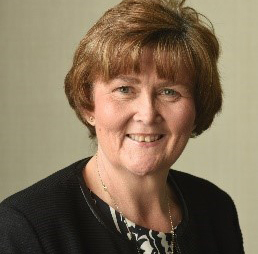
Introduction from the Lead Member Governance, Finance & Corporate Services, Cllr Jim Foreman
Medium Term financial planning is a key part of South Tyneside’s policy and budget framework. Driven by our South Tyneside Council Strategy and the ambitions within it, it sets out our strategic approach to the management of our finances, within which delivery of our priorities will be progressed.
Like all local authorities, South Tyneside Council operates within a framework of statutory obligations that are shaped by wider political and legislative powers. This document covers the period 2026-27 to 2030-31 and is subject to annual review. This helps to ensure our financial planning is responsive to changing national and local factors, considering emerging risks and to protect our financial health. This document also sets the Council’s budget for 2026-27.
Wider factors which influence what we can deliver
National legislation
For example, introduction of new local responsibilities or changing relationships such as with schools or health partners
Funding decided at a national level
Including funding pots which areas must compete for, or changes to business rates or council tax affecting expected revenue
Economic environment
Including rising inflation, impacting on energy bills, staff wages and goods and services
Societal changes
Including new technology and changing global priorities, such as around climate action, the shift to increasingly remote working, or political conflicts
National policy and guidance
For example new inspection frameworks or standards
The different powers and functions devolved to different levels of government
For example around skills or transport
Changes in demand
For example an aging population meaning a greater number of residents requiring support to live independently, or a birth rate increase meaning more nursery or school places
Our key financial planning principles are:
- Financial sustainability over the long and short-term
- Planning over multi-year horizon
- Alignment of decisions with Strategic Priorities
- Availability of investment and savings choices which are clear and transparent
- Explicit linkages between capital budgets and revenue investment / costs
- Risk mitigation against existing and emerging macro cost pressures
Working with our partners, we have delivered a huge range of services and successful outcomes for both the residents and businesses of South Tyneside, including:
- Managing 600km of road and 1,100km footway
- Welcoming nearly 6m visitors to the Borough
- Supporting over 22,000 children in their nursery, primary and secondary education
- Handling over 300,000 customer contacts
- Processing over 60,000 benefit applications and changes
- Managing over 16,000 Council homes
- Managing over 16,000 Council homes
- Empty 6.5m bins
- Inspect 400 food outlets
- Supporting 3,600 people at risk of homelessness
- Responding to 4,000 adult safeguarding concerns
- Processing 3,100 licenses and permits
- Managing over 140 industrial units
- Supporting 3,700 with assistive technology to remain independent
- Responding to 26,000 new adult social care contacts
- Supporting 3,500 adult learners
- Managing 1,800 referrals to Children’s Social Care
- Supporting 2,800 ‘in need’ children and young people
- Managing an estimated 220,000 trees
- Hosting 1.6m admissions to Council leisure facilities
- Supporting 4,700 individuals with special educational needs
- Cutting 641 hectares of grass
- Supporting over 2,500 low-income families through the Reducing the Cost of the School Day programme
- Helping 1,600 people with welfare support
- Supporting 2,015 carers and 895 young carers
Delivering a balanced and sustainable budget for South Tyneside is more challenging than ever. Like councils across the country, we face unprecedented cost and demand pressures, particularly in Adult Social Care, Children’s Services, and SEND transport. These pressures are driven by rising requests for support, increasing complexity of need, and the ongoing impact of national funding constraints.
Despite these challenges, our focus remains on prudent financial management and making every pound count for our communities. We are investing in the Borough’s future. Supporting vulnerable residents, tackling child poverty, improving neighbourhoods, and creating opportunities for all. Our approach is guided by what residents have told us matters most to them, and we continue to listen and respond through ongoing engagement and consultation.
We are taking decisive action to manage demand driving efficiencies, focussing on prevention and early intervention and working with partners to deliver better outcomes. This includes investing in new care models and accommodation models, developing in-borough accommodation for children, and introducing innovative approaches to SEND transport. At the same time, we are committed to protecting frontline services and targeting resources where they are needed most.
We have a long history of prudent financial management, and we’ve protected services for many years as well as providing much needed subsidy that residents have come to rely on in some areas. We’ve worked to make sure that services are accessible whilst recovering some of the rising costs incurred. This is now becoming much more challenging and we will have to continue to make some difficult choices in the coming years.
We’ll aim to continue to improve efficiency, and redesign services to deliver better value for taxpayers while continuing to fight for fair funding from Government.
Our Medium Term Financial Plan is ambitious but responsible. It recognises the importance of financial sustainability, ensuring we continue to deliver essential services and invest for the long term. By working together, we will ensure South Tyneside remains a place of ambition, resilience, and opportunity for all.
Financial Challenge
These are seriously challenging times for local people, businesses and for local councils. Across the country, councils are grappling with balancing budgets and keeping frontline services going. Despite recent falls in inflation, cost-of-living continues to be clearly and understandably at the forefront of people’s minds and a key focus for the Council whilst also dealing with significant rises in costs and demand for our services.
These significant increases in demand and complexity of need for Adults and Children’s Social Care, Special Educational Needs and associated supported transport and the increased costs of these services means that the Council needs to spend more money to continue to deliver its current services. Recent Central Government announcements including the Comprehensive Spending Review in June 2025 and the recent final settlement and economic forecasts indicate that future funding for councils within the lifetime of this parliament will remain very tight.
We continue to adapt to our evolving circumstances and explore new and different ways to deliver our services in the context of a limited core Government grant which has resulted in our total annual revenue resources reducing significantly in real terms since 2010. We also review our comparative spending levels with other authorities by reference to tools such as the Chartered Institute of Public Finance and Accountancy (CIPFA) Resilience Index. The announcement of a three-year funding settlement for the period 2026/27 to 2028/29 is welcome to allow the Council surety of its funding for the next three years so it can plan adequately and take a much more informed and longer-term approach to our financial planning.
The announcement of the Fair Funding 2.0 reforms as part of the provisional Local Government Finance Settlement on 20 December 2025 and the final settlement on 9 February 2026 has an overall negative impact on the Council’s Medium Term Financial Plan for 2026-31 when compared to equivalent estimates outlined in the MTFP 2025-30. This will require the Council to further review how and what services it delivers within the resources it has available. Further detail on the impact of the proposed reforms on the Council is detailed in chapter 2 of this report. We will continue where possible to work with local, regional and national partners to lobby central government to get the best and most fair financial settlement for our residents and businesses.
The Council receives 55% of its income from council taxpayers, retained business rates and use of reserves. Previous reductions to Central Government funding and demand pressures have meant that councils now rely significantly more on local tax revenues for their overall funding. The budget has been calculated incorporating an increase of 4.95% in Council Tax for 2026/27. 2% of this increase relates to the Adult Social Care levy contributing towards the funding gap within Adult Social Care services.
Budget Consultation
The Council undertook a comprehensive budget consultation in late 2025 to inform priorities and decisions for the 2026/27 Medium Term Financial Plan. The consultation aimed to capture residents’ views on council services, spending priorities, and acceptability of charging for services.
The budget consultation for the Medium Term Financial Plan 2026/27 was conducted using both online and paper surveys to ensure broad and representative engagement across South Tyneside.
The online survey, which ran from 20 October to 7 December 2025, asked participants to rank what they value most in council services. This approach yielded 1,215 completed online responses. Alongside this, a shorter paper survey was made available in council buildings, resulting in 1,329 additional responses. In total, 2,544 residents took part in the consultation, creating a statistically robust sample. This comprehensive participation ensures that the findings are highly reliable and truly reflective of the views of South Tyneside’s community.
Key findings:
Top Priorities for Residents
- Top Priorities for Residents
- Revitalising neighbourhoods
- Leisure centres and community activities
- Job skills training
- Welfare support and foodbanks
- Community and voluntary group support
- Affordable social homes
The range of respondents broadly matched the population spread across South Shields, Hebburn, Jarrow, Whitburn, Cleadon, Boldon, and other areas. The consultation provided the Council with a strong evidence base for informing budget priorities, with clear resident support for tackling anti-social behaviour, investing in neighbourhoods, and supporting community activities. The size of the response ensures confidence that these findings reflect wider community views and can be reliably used to inform council decisions.
Assessing Potential Impacts
Councils have a duty under the requirements of the Equality Act 2010 to consider the impact of their decisions on people with ‘protected characteristics’. There are nine protected characteristics identified by the Act: age, disability, gender reassignment and identity, marriage and civil partnership, pregnancy and maternity, race, religion or belief, sex and sexual orientation. The Council has also chosen to adopt care leavers, armed forces veterans and socio-economic factors as local “protected characteristics”.
We are committed to embracing the principles of equality, diversity, inclusion and belonging (EDIB) in everything that we do. For example, we have an elected member portfolio and lead, an elected member champion to promote the principles of EDIB, established clear equality objectives, re-affirmed our commitment against racism by formally signing an Anti-Racism charter and celebrated the local LGBTQIA+ community through a series of inclusive events. We have also agreed and are delivering on an EDIB strategy and action plan.
We have taken steps to increase and positively acknowledge the diversity within our workforce through a number of staff collaborative forums as well as an ongoing survey to better understand the characteristics of our workforce. A strengthened training and development offer to support managers and staff in understanding and awareness of EDIB issues has also been embedded.
As part of setting our budget we carry out Equality Impact Assessments (EqIAs) of proposals that will result in a change to services or policies in the next financial year to understand the impact of these changes on our population and to make sure we do not discriminate against individuals or groups. This will support us in making fair, transparent and evidence-based decisions.
Sustainability
We remain committed to creating a sustainable Borough that tackles the challenges of climate change and supports a fair, green transition. The 2020-2025 Sustainable South Tyneside Strategy has now come to a close, and the Council is implementing an interim framework - the Statement of Intent 2025-2027 - to maintain progress while preparing the next long-term strategy. This monitored process will ensure alignment across all Council ambitions.
The transition phase focuses on embedding sustainability and climate resilience into everyday decisions, broadening our approach from carbon reduction to environmental growth and the wider benefits it brings, including improved health, inclusive economic development, and stronger community resilience.
Key actions over the past year include hosting the Climate Summit 2025, which brought together over 200 participants to shape priorities for energy innovation, business sustainability, and community engagement, helping to inform next steps. Looking ahead, work is underway to develop the Environmental Growth Strategy 2027-2030, which will set out decarbonisation pathways and a comprehensive roadmap for climate action across energy, transport, buildings, waste, and land use.
In the meantime, subject to funding, we continue to invest in renewable energy schemes, electrification of the Council’s fleet, LED street lighting upgrades, and nature-based solutions such as the Stronger Shores project to protect against coastal erosion and flooding.

Revenue Budget
How we Fund our Budget
The table below sets out the Council’s forecast level of funding for the period 2026-27 to 2030-31. The table indicates that the Council has four main sources of funding; government grants, council tax, business rates and council reserves.
| 2026/27 £m | 2027/28 £m | 2028/29 £m | 2029/30 £m | 2030/31 £m | |
|---|---|---|---|---|---|
| Government Funding | |||||
| Fair funding settlement | 97.432 | 92.209 | 87.736 | 75.761 | 77.276 |
| Public Health Grant | 17.484 | 17.833 | 18.175 | 18.539 | 18.909 |
| Subtotal Government Funding | 114.916 | 110.042 | 105.911 | 94.300 | 96.185 |
| Collection Fund | |||||
| Council tax | 83.883 | 89.084 | 94.019 | 99.197 | 104.632 |
| Retained business rates | 52.883 | 53.903 | 54.991 | 55.596 | 56.208 |
| Collection Fund Contribution | 1.350 | - | - | - | - |
| Subtotal collection fund | 137.928 | 142.987 | 149.010 | 154.793 | 160.840 |
| Use of reserves | |||||
| Use of / (Transfer to) Reserves | (4.616) | (4.241) | (7.885) | 4.427 | 3.254 |
| Subtotal use of reserves | (4.616) | (4.241) | (7.885) | 4.427 | 3.254 |
| Total General Fund Budget | 248.228 | 248.788 | 247.036 | 253.520 | 260.279 |
Government Funding
The Government published its Comprehensive Spending Review (CSR) on 11 June 2025, which set out the departmental expenditure limits for all Government departments between 2026/27 and 2028/29.
As part of the CSR, the Government have continued with the trend of passing the burden of increasing taxation onto councils, by expecting 5% uplifts in Council Tax to be applied by social care authorities (which is inclusive of a 2% Social Care Precept).
The Government assumption is that maximum council tax increases are applied by all authorities, and this is embedded into the Government’s Core Spending Power calculations for the Comprehensive Spending Review period - in effect council tax increases are assumed to be substantially funding the huge pressures being seen in social care expenditure. This expectation lays bare the inequities in the tax raising capacity from one local authority area to another.
It was stated on 11 June 2025 that the Core Spending Power of Local Government would increase by 2.6% annually in real terms. However, if assumed Council Tax increases are removed, Local Government faces a real terms reduction in funding across the Comprehensive Spending Review period.
On 20 June 2025 Government published its Fair Funding Review (FFR) 2.0 proposals for consultation, with responses required within eight weeks, by 15 August 2025. As part of this review, the Government proposed to subsume several existing specific grants into a core general grant, which was to be redistributed using an updated “Relative Needs Assessment” which considers the various cost drivers affecting individual local authorities across England.
The Government proposed introducing additional needs assessments for areas such as Home to School Transport and Temporary Accommodation demand, with updated formula and weightings being applied for areas such as Children’s and Adult Social Care.
It also proposed the introduction of a 3-year funding settlement which is welcomed by the Council and the Local Government sector as it allows authorities to more realistically plan for the medium-term, compared to recent years where only single year settlements have been given which made planning longer than 1 year increasingly challenging.
The analysis of these proposals was that the Council stood to benefit from changes to the Children Social Care Formula (due to significant increases in children in care in recent years) but was going to lose out on changes to other areas such as the Adult Social Care formula (primarily due to falls in its relative national share of the adult population across England). The modelling identified that the Council would face a reduction in funding of £22m (11.2%) under the proposed model, which went against previous expectations of a real terms increase in funding for councils such as South Tyneside which have faced some of the biggest reductions in government funding over the past 15 years.
The Council submitted a detailed response to the consultation and was party to a regional response submitted by the North East Combined Authority (NECA) and all of its constituent authorities in August 2025, to raise its concern and challenge the government proposals to ensure South Tyneside receives an increase in funding rather than a reduction.
On 20 November 2025 Government published its Local Government Finance Settlement Policy Statement, which included final proposals for the FFR 2.0 following the consultation. These proposals were then included in the provisional Local Government Finance Settlement on 18 December 2025.
The policy statement and provisional settlement announced a number of changes to the original proposals, including changes to a number of the funding formula weightings, updates to some of the datasets used as the basis for allocating funding such as population and deprivation, and retention of the Recovery Grant as a separate grant outside the Fair Funding Formula.
There was also announcement of a specific minimum increase in core spending power for councils such as South Tyneside that are in receipt of the Recovery Grant, guaranteeing a minimum increase of 5% for 26/27 and further 1% increases for each of 27/28 and 28/29, capped at a maximum of £35m per authority over the period.
This was welcome compared to the original proposals of a 11.2% reduction in funding, however for South Tyneside due to the £35m cap on gains we anticipate an increase of 5% increase in funding for 26/27 but then 0% increases over the following two years which when 5% increases in Council tax are assumed as part of the increase in core spending power, equates to a 10% real terms cut in government funding over the period 2027/28 to 2028/29. Such a funding reduction which is the 3rd worst out of 36 metropolitan authorities in the country and the worst within the North-East region will require the Council to increase its savings requirement over the next 3 years to be able to set a balanced budget.
The Council submitted a response to the consultation launched alongside the provisional settlement to highlight to Government the specific impact of the proposals upon South Tyneside, and to lobby for improvements in funding for the Council to minimise the impact of the funding changes. It also lobbied through other interest groups such as the Special Interest Group of Municipal Authorities (SIGOMA), the North East Combined Authority (NECA) and through the Ministry of Housing, Communities and Local Government (MHCLG) directly.
The Final Local Government Finance Settlement was announced on 9 February 2026 and is the first multi-year settlement provided since 2016 and provides confirmation of funding for the 3-year period from 2026/27 to 2028/29, which is welcome in terms of assisting the Council in setting a balanced budget over the medium-term. However, under the current fair funding proposals, the Council would face a significant reduction in funding in 2029/30.
The Final Settlement confirmed a number of further changes to the funding for South Tyneside following lobbying by the Council and other similarly impacted Authorities, including:
- Additional Recovery Grant specifically aimed at those authorities with lower levels of core spending power increases through the provisional settlement. South Tyneside has received an additional £3.4m. Further increases for 2027/28 and 2028/29 were also confirmed.
- Additional Homelessness, Rough Sleeping and Domestic Abuse Grant of £0.1m, which is a further 6% increase on the amount proposed in the provisional settlement.
- A requirement for councils to fund a proportion of any deficits accrued relating to special educational needs as at 31 March 2026. Similar provisions are expected for the following two financial years. It is estimated that the Council would face an additional liability of c.£3m to fund in 2028/29.
The changes confirmed in the Final Settlement have the impact of increasing the core spending power for the Council from 5.8% to 8.6% over the period 2026/27 to 2028/29.
Our core spending power will increase to £239.1m for 2026/27, an increase of 7.5%, which compares with an all-England average of 6.1%. This includes:
- Fair Funding Allocation of £150.2m, which is an increase of £10.9m (7.8%) compared to the equivalent funding of £139.3m for 2025/26. The Fair Funding Allocation covers:
- The Revenue Support Grant (RSG) totalling £63.5m.
- Baseline Funding Level, which is the Government’s notional measure of business rates income due to councils totalling £52.7m.
- Local Authority Better Care Grant, totalling £12.9m, the same as received in 2025/26.
- Recovery Grant totalling £9.3m, which is an increase of £3.4m compared to that received in 2025/26.
- Recovery Grant Guarantee totalling £11.667m.
- Homelessness, Rough Sleeping and Domestic Abuse Grant of £1.8m, which is a £0.9m (100%) increase from the equivalent amount received in 2025/26.
- Homelessness, Rough Sleeping and Domestic Abuse Grant of £1.8m, which is a £0.9m (100%) increase from the equivalent amount received in 2025/26.
- Government assumption that council tax will increase by 5.0%.
Council Tax
Section 30 of the Local Government Act 1992 requires the Council to set an amount of council tax for each financial year for each category of dwellings in its area.
A council tax bill is made up of several different charges. Alongside the charge to fund council services, which is inclusive of levies from external bodies to support functions such as transport and flood defence, the overall council tax level set for the Borough includes precepts for the Tyne & Wear Fire and Civil Defence Authority and Northumbria Police and Crime Commissioner. From 2017/18 councils with responsibility for Adult Social Care have been given the ability to raise council tax by an additional levy to cover a funding shortfall in this area. The figures below include a 2% increase in respect of Adult Social Care and a 2.95% general annual increase. Due to the pressures within Adult Social Care, there will still remain a significant funding gap.
The amount payable for dwellings in different valuation bands is calculated using the following proportions for each valuation banding:
| Valuation band | |
|---|---|
| A | 6/9 |
| B | 7/9 |
| C | 8/9 |
| D | 9/9 |
| E | 11/9 |
| F | 13/9 |
| G | 15/9 |
| H | 18/9 |
Thus giving the following council tax amounts for the South Tyneside area (including a 2% precept to fund Adult Social Care but excluding other precepts).
| Valuation band | South Tyneside Council (£) |
|---|---|
| A | 1,409.99 |
| B | 1,644.99 |
| C | 1,879.99 |
| D | 2,114.98 |
| E | 2,584.97 |
| F | 3,054.97 |
| G | 3,524.97 |
| H | 4,229.96 |
To these must be added the precepts of Tyne & Wear Fire and Civil Defence Authority and the Northumbria Police and Crime Commissioner. At this stage, we have not received the final notification of the agreed precepts for the Tyne and Wear Fire and Civil Defence Authority and the Northumbria Police and Crime Commissioner for 2026/27, therefore we have calculated increases of £5.00 and £18.50 respectively based on the indicative increase still to be agreed from Tyne and Wear Fire and Civil Defence Authority and Northumbria Police and Crime Commissioner. The final confirmed precepts are expected to be known by the time Council meets on 26 February 2026. Should the actual precepts differ from the estimates provided, Cabinet budget recommendations to Council will be updated to reflect any change.
| Valuation band | Tyne & Wear Fire and Civil Defence Authority (£) | Northumbria Police & Crime Commissioner (£) |
|---|---|---|
| A | 70.07 | 142.89 |
| B | 81.75 | 166.71 |
| C | 93.43 | 190.52 |
| D | 105.11 | 214.34 |
| E | 128.47 | 261.97 |
| F | 151.83 | 309.60 |
| G | 175.18 | 357.23 |
| H | 210.22 | 428.68 |
These result in the following council tax amounts (including precepts):
| Valuation band | South Tyneside Council (£) |
|---|---|
| A | 1,622.95 |
| B | 1,893.45 |
| C | 2,163.94 |
| D | 2,434.43 |
| E | 2,975.41 |
| F | 3,516.40 |
| G | 4,057.38 |
| H | 4,868.86 |
Retained Business Rates
The Council collects Business Rates in the Borough and keeps 50% of the collected rates income. The other 50% is passed to Central Government which is then distributed back to councils as part of the Fair Funding Formula arrangements to reflect individual spending requirements.
Council Reserves
The Council aims to establish reserves based on financial risk and limit the use of reserves to support on-going spending. More detail on our risks and reserves held is shown in Chapter 3.
Budget Pressures and Investment
Priority Investment
Our investment choices are guided by our strategic risks, our Council Ambitions and feedback received from the budget consultation. For 2026/27, we are investing £0.500m in Community Responders to support residents and community concerns around anti-social behaviour in our neighbourhoods.
Work continues to further align our resources to achieve our priorities and to generate future savings through our five-year budget planning process.
Inflationary and Standstill Pressures
Price inflation is currently reducing from a historical high of 11% at the beginning of 2023/24 to around 3.6% currently. Many of our contracts are linked to various inflation factors in the Consumer Price Index, including the national living wage. Demands upon Adults and Children’s Social Care continue to increase significantly. This means that the Council must spend considerably more just to continue providing the same services albeit costs will be mitigated in the longer term through service transformation across social care. A list of the standstill pressures for 2026/27 and estimates for 2027/28 to 2030/31 is shown in the table below:
| 2026/27 £m | 2027/28 £m | 2028/29 £m | 2029/30 £m | 2030/31 £m | |
|---|---|---|---|---|---|
| Inflation | |||||
| Cost of Living Increase | 4.666 | 3.902 | 3.349 | 3.433 | 3.518 |
| Net Inflation on prices and income | 5.0022 | 4.049 | 3.420 | 3.481 | 3.544 |
| Subtotal Inflation | 9.688 | 7.951 | 6.769 | 6.914 | 7.062 |
| Other pressures | |||||
| Adult Services Demand Pressures | 5.000 | 1.500 | 1.500 | 1.500 | 1.500 |
| Children's Services Demand Pressures | 7.674 | 1.250 | 0.500 | - | - |
| Other Forecasted Pressures | (0.396) | 2.630 | 0.700 | 1.070 | 1.197 |
| Subtotal Other Pressures | 12.278 | 5.380 | 2.700 | 2.570 | 2.697 |
| Changes to External Grant | |||||
| Chnages in External Funding | 0.040 | (0.299) | (0.297) | - | - |
| Subtotal Changes to External Grant | 0.040 | (0.299) | (0.297) | - | - |
| Total Revenue Standstill Pressures | 22.006 | 13.032 | 9.172 | 9.484 | 9.759 |
Summary Medium Term Financial Position
Taking into consideration our funding, priority investment and standstill pressures, the table below gives a summary of our medium-term financial position for 2026/27 to 2030/31.
| 2026/27 | 2027/28 | 2028/29 | 2029/30 | 2030/31 | |
|---|---|---|---|---|---|
| Base Budget | 237.376 | 248.228 | 248.788 | 247.036 | 253.520 |
| Priority Investment | 0.500 | - | - | - | - |
| Standstill Pressures | 22.006 | 13.032 | 9.172 | 9.484 | 9.759 |
| Funding Available | (248.228) | (248.788) | (247.036) | (253.520) | (260.279) |
| Budget Gap | 11.654 | 12.472 | 10.924 | 3.000 | 3.000 |
| To be addressed by | |||||
| Specific Grants | (0.535) | 0.028 | 0.376 | - | - |
| Service Efficiencies | (11.119) | (12.500) | (11.300) | (3.000) | (3.000) |
The diagram below shows our revenue budget for 2026/27 by Directorate. Appendix 1 provides more detail on the 2026/27 budgets for each service. Housing services to council tenants are shown separately in Chapter 4 (Housing Revenue Account).
| Directorate | 2026/27 Budget |
|---|---|
| Adult Social Care and Comissioning | 83.542 |
| Children's Services | 65.571 |
| Public Health | 17.484 |
| Place Strategy | 27.276 |
| Community Operations | 3.959 |
| Business and Resources | 43.325 |
| Governance and Corporate Affairs | 7.070 |
Budget Savings
The funding confirmed through the Local Government Finance Settlement for the next three years and estimates for the two years following to be received from Central Government and from council taxpayers over the next five years is insufficient to cover our current level of spend plus our new budget pressures. Therefore, to make sure we can continue to focus spending on our priorities and ambitions, we have identified proposals for reducing spending, generating income and increasing efficiency across all of the Council’s services for 2026/27. This will mean that our spending plans are affordable and match the money we expect to receive. Further work will be required to address an anticipated further funding gap from 2027/28 onwards as we will need to spend more to maintain existing levels of services.
The proposals are led by the ‘Our Council’ Transformation Programme, which focuses on the major and prioritised programmes of change which will have significant financial, policy or strategic implications for the Council and Borough. There are three major programme workstreams (Improving Public Services, Modern Council and Transforming South Tyneside the Place) which are led by a programme sponsor and a separate programme board, reporting into an overarching Transformation Board. The Transformation Board is the focal point for facilitating collaborative activity around public service reforms whilst managing risk, which will underpin the Council’s financial sustainability in the medium-term to assist in closing the projected financial gap within the Medium Term Financial Plan.
Plans for reducing spending, delivering new models of service, additional income and increasing efficiency in 2026/27 are shown in the following table.
| Budget Savings | 2026/27 Amount £m |
|---|---|
| Adult Social Services & Commissioning | |
| Collaborative system diagnostic | 1.300 |
| Adult Social Care Charging - Wellbeing / Floating Support | 0.380 |
| Adult Social Care Resources | 0.200 |
| Contractual Changes | 0.125 |
| Revised provision thresholds for low-level equipment to support adults in their own home and increased income from health partners for associated equipment | 0.100 |
| Subtotal Adult Social Services & Commissioning | 2.105 |
| Business and Resources | |
| Support Services | 2.150 |
| Management Review | 1.370 |
| Reduce debt charges through basic core capital programme around key assets only | 0.250 |
| Leisure Centre Income | 0.200 |
| Transformation Programme - Modern fit for purpose Council workstream | 0.200 |
| Increased fees and changes - car parking foreshore, bereavement, school meals and other | 0.198 |
| Revenue & Benefits | 0.160 |
| Historic Pensions reduced costs | 0.150 |
| Community Area Forum scheme | 0.110 |
| Supplier Incentive Scheme additional income | 0.100 |
| HR / Payroll | 0.100 |
| Customer Services | 0.080 |
| Recovery of NNDR Court costs | 0.050 |
| Finance | 0.050 |
| Procurement | 0.050 |
| Corporate Training | 0.050 |
| Alternative Reception arrangements | 0.030 |
| Jarrow Hall running costs | 0.025 |
| Subtotal Business and Resources | 5.323 |
| Children's Services | |
| Review of Children's Day Care Provision | 0.764 |
| School Meals Charges Review | 0.275 |
| Review of Family Hub model | 0.251 |
| Connexions | 0.080 |
| School Milk Charges Review | 0.035 |
| Outdoor Education | 0.031 |
| Subtotal Children's Services | 1.436 |
| Public Health | |
| Green exercise programme | 0.030 |
| Flu Vaccination Programme for staff | 0.014 |
| Womens Health | 0.006 |
| Subtotal Public Health | 0.050 |
| Place Strategy | |
| Adult and Community Learning - reduction of subsidy | 0.232 |
| Community Facilities | 0.200 |
| Building Cleaning Commercial Review | 0.100 |
| Hawthorne Commercial Lettings | 0.100 |
| Waste PFI - contractual savings | 0.100 |
| Public Protection - Community Protection | 0.098 |
| Planning | 0.052 |
| Transport & Environment Carbon Reduction and Sustainability | 0.022 |
| Place Strategy car mileage reduction | 0.017 |
| Subtotal Place and Communities | 1.087 |
| Community Operations | |
| South Shields car parking charges review | 0.320 |
| Streetscene | 0.198 |
| Highways Maintenance | 0.100 |
| School Crossing Patrols | 0.052 |
| Green waste charges increase | 0.032 |
| Road Safety Team | 0.039 |
| Subtotal Community Operations | 0.741 |
| Governance & Corporate Affairs | |
| Events programme review | 0.170 |
| Policy / Communications | 0.100 |
| Civic / Members services | 0.090 |
| Newsletters | 0.017 |
| Subtotal Governance & Corporate Affairs | 0.377 |
| Total savings | 11.119 |
Equality Impact Assessment of Budget Savings
The Council has a legal duty to set a balanced budget each year. To meet our responsibilities to the Equality Act 2010 and the Public Sector Equality Duty, we carry out Equality Impact Assessments (EqIAs) for all our budget savings proposals to ensure that the potential effects of decisions on those protected by equality legislation are considered prior to any decision being made.
There are nine protected characteristics under the Equality Act 2010 that we must consider separately:
- Age
- Disability
- Sex
- Sexual Orientation
- Gender Reassignment
- Marriage or Civil Partnership
- Pregnancy & Maternity
- Race (including colour, ethnicity, nationality or national origin)
- Religion or belief
The Council has also extended the scope of EqIAs to include a further three groups which we have identified in line with our Ambitions and Strategy:
- Care experienced individuals
- Armed Forces Veterans
- Those at risk of socio-economic disadvantage
The EqIA aims to assess the potential impact of a decision where it may result in a disproportionate change to services for those groups with protected characteristics, and to identify any mitigation that is to be implemented to reduce or remove the disproportionate impact on those groups.
There are seven EqIAs for proposals that will potentially impact on services and polices for protected groups in 2026/2027:
- Adult Social Care Charging – Wellbeing / Floating Support
- Contractual changes
- Revised provision thresholds for low-level equipment to support adults in their own home and increased income from health partners for associated equipment
- Connexions
- Outdoor education
- Green exercise programme
- Women’s Health
A summary of the findings from the assessment of all the budget savings proposals and the seven individual detailed EqIAs are included in Appendix 6.
Dedicated Schools Grant (DSG)
The Council will receive £197.840m (£189.173m 2025/26) Dedicated Schools Grant (DSG) in 2026/27 which is ringfenced for the education of children. From this amount the Department for Education (DfE) will recoup the funding for academies in South Tyneside and external commissioned High Needs places, which is estimated to be £61.833m (£59.556m 2025/26).
DSG is allocated over four blocks of funding. Local authorities can only switch resources between blocks with the permission of the Schools Forum and/or Secretary of State. The four blocks through which DSG is allocated consists of:
- Schools block covering provision in mainstream schools from Reception to Year 11. The 2026/27 notified allocation is £136.865m (£131.916m 2025/26) before recoupment.
- Central Services Schools block which covers commitments such as admissions and certain prescribed statutory and regulatory duties. The 2026/27 notified allocation is £1.891m (£1.639m 2025/26).
- Early Years block covering nursery schools, nursery classes and Private Voluntary and Independent sector providers of early years provision (PVIs). The 2026/27 notified allocation is £23.597m (£22.749m 2025/26).
- High Needs block covering pupils with high needs – defined by the DfE as those requiring provision costing in excess of a given threshold. The 2026/27 notified allocation is £35.486m (£32.869m 2025/26) before recoupment.
Risks and Reserves
Risk Assessment
Over the short and medium-term the Council faces continuing financial pressures as well as investment needs and has refocused its priorities and built budget redirections and savings targets into the spending plans for 2026 to 2031. The Council carefully identifies the things that could go wrong and might undermine the MTFP.
To do this an assessment is made of what the impact would be if these things happen and how likely they are to happen. The Council ensures that it has plans in place in case things do not turn out as expected. This is part of our risk management strategy, which underpins all that we do, not just our financial plans.
The significant financial risks are identified on the Council’s strategic risk register. They have all been assessed as part of the strategic planning process. These risks are being actively managed and the estimated financial implications have been built into this MTFP.
Some of our strategic risks have been assessed as particularly uncertain with a potentially significant financial impact. Reserves have been established for these risks.
The following table identifies the key risks to the delivery of the MTFP, the actions taken (within this financial plan) and the actions proposed to reduce the impact of these risks on the Council’s future financial position.
Strategic Financial Risk and Risk Management
| Risk to the delivery of the MTFP | Risk managed by: | Risk rating |
|---|---|---|
| Risk that the demand and costs for services (adults and children) could increase further than estimated and that the volatile demand led budgets are not rigorously managed. | Revenue spending is monitored on a monthly basis as part of the Council’s corporate performance monitoring framework. Strategies to support independence, choice, early intervention and sustainability have been developed and are being implemented. Where demand increases are in excess of current budgets after measures to manage demand have been factored into service delivery, additional required resources are built into future year budgets through the MTFP standstill adjustment process. | High |
| Risk that the funding required to meet external inspection standards across Adults and Children’s Social Care is insufficient. | Transformation programme in place across adult social care. Multi-agency improvement board in place for Children’s Social Care and work with regional DfE lead for improved resources. | High |
| The Council is unable to deliver its financial plans. | The achievement of the MTFP is imperative without which the Council would become financial unsustainable and is monitored every month as part of our performance monitoring process incorporating rigorous challenge to budget holders and focused corporate oversight. There is a plan to replenish reserves where these are insufficient to provide an appropriate financial buffer. | High |
| Government plans to revise the system of funding for Local Government may result in actual resources being less than the levels forecast. | The proposed Fair Funding Review 2.0 from 2026/27 has identified that South Tyneside Council funding will be reduced compared to previous forecasts as a result of the changes. These revised forecasts have been built into the MTFP 2026-31 and savings requirements for the period have been adjusted accordingly. | High |
| Risk that inflation, interest rates, energy prices etc do not stabilise in the medium to long-term. | Regular monitoring of the MTFP and reporting to Cabinet / Borough Council to identify and understand inflationary and other cost pressures. Regular review of capital financing requirements. | Medium |
| Risk that the Council is unable to align its resources to its ambitions. | Collaborative approach to budget and service planning ensures that any new investment / savings decisions are assessed against delivery of the Council ambitions. | Medium |
| The cost of commissioned care may increase due to the national living wage, inflationary pressures and legislative changes. | The Council has anticipated cost pressures in this area within its financial plans. | Medium |
| Financial pressures and demands associated with the national health service resulting in additional social care costs. | Integrated working with health partners across the whole system of health and social care is embedded. | Medium |
| Uncertainty over the future funding of the capital programme. | We maximise the availability of capital receipts and external funding to support the capital programme thereby reducing the call on Council borrowing. Affordability of borrowing is regularly assessed and monitored. | Medium |
| Emergency event occurs e.g. major flooding incident / loss of ICT systems / significant traffic incident / flu pandemic which incurs additional unbudgeted costs and loss of income. | The Council has robust systems in place for emergency events and business continuity. The Council maintains a contingency budget and insurance reserves to meet unforeseen liabilities. | Medium |
Planned Use of Reserves
The level of Council reserves is reviewed annually in line with CIPFA guidance. Our Reserves Policy is shown at Appendix 2.
Our forecast Use of Council reserves is shown in the table below.
| Council reserves | Unearmarked General Fund Reserve £m | Earmarked Reserves £m | Total Reserves £m |
|---|---|---|---|
| Estimated balance as at 31st March 2026 | 4.002 | 9.694 | 13.696 |
| Planned increase in 2026/27 | 4.616 | - | 4.616 |
| Estimated balance as at 31st March 2027 | 8.618 | 9.694 | 18.312 |
| Estimated balance as at 31st March 2027 | 8.618 | 9.694 | 18.3121 |
| Planned increase in 2027/28 | 4.241 | - | 4.241 |
| Estimated balance as at 31st March 2028 | 12.859 | 9.694 | 18.312 |
| Estimated balance as at 31st March 2028 | 12.859 | 9.694 | 22.553 |
| Planned increase in 2028/29 | 4.885 | - | 4.885 |
| Estimated balance as at 31st March 2029 | 17.744 | 9.694 | 27.438 |
| Estimated balance as at 31st March 2029 | 17.744 | 9.694 | 22.553 |
| Planned increase in 2028/29 | (4.427) | - | (4.427) |
| Estimated Balance as at 31st March 2030 | 13.317 | 9.694 | 23.011 |
| Estimated balance as at 31st March 2030 | 13.317 | 9.694 | 23.011 |
| Planned increase in 2030/31 | (3.254) | - | (3.254) |
| Estimated Balance as at 31st March 2031 | 10.0063 | 9.694 | 19.757 |
Housing Revenue Account
The Housing Revenue Account (HRA) is required to be maintained by councils who provide housing accommodation. It records the income and expenditure in relation to the management and maintenance of homes and keeps this separate from other council activity.
All rents collected are retained in this separate account; they support the management, day-to-day repairs and maintenance, and a capital investment programme which includes planned renewals, improvements to homes and major repairs.
All rents collected are retained in this separate account; they support the management, day-to-day repairs and maintenance, and a capital investment programme which includes planned renewals, improvements to homes and major repairs.
The following table shows the budget for 2026/27 and the provisional HRA expenditure and income plans for 2027/28 to 2030/31.
| Budget | Provisional Budget | ||||
|---|---|---|---|---|---|
| Housing Revenue Account | 2026/27 £m | 2027/28 £m | 2028/29 £m | 2029/30 £m | 2030/31 £m |
| Expenditure | |||||
| Management | 20.449 | 21.342 | 22.166 | 23.160 | 24.181 |
| Repairs & Maintenance | 20.421 | 21.292 | 22.314 | 23.372 | 24.484 |
| Rents, Rates, Taxes, Insurance | 3.264 | 3.340 | 3.419 | 3.499 | 3.581 |
| Provision for Bad Debts | 0.315 | 0.322 | 0.328 | 0.335 | 0.341 |
| Capital Programme Investment | 30.123 | 29.245 | 29.265 | 31.886 | 32.062 |
| Debt charges | 10.359 | 10.364 | 10.369 | 10.374 | 11.379 |
| Other Capital Charges | 0.059 | 0.060 | 0.061 | 0.062 | 0.063 |
| Total Housing Revenue Account Expenditure | 84.990 | 85.965 | 87.922 | 92.688 | 96.091 |
| Income | |||||
| Rents - Dwellings | (75.281) | (78.252) | (81.971) | (85.693) | (89.217) |
| Income - Other services/property | (4.119) | (4.512) | (4.513) | (4.617) | (4.723) |
| Contributions & interest | (2.151) | (2.190) | (2.230) | (2.271) | (2.312) |
| Total Housing Revenue Account Income | (81.551) | (84.954) | (88.714) | (92.581) | (96.252) |
| (Surplus) / Deficit on Housing Revenue Account | 3.439 | 1.011 | (0.792) | 0.107 | (0.161) |
Housing Revenue Plans for 2026/27
Rent levels are proposed to increase on average by 4.8% in line with Government guidelines and full adoption of the flexible Government rent standard. Reserves are planned to be prudently applied in the next few years to support the Housing Capital Programme.
In order to maintain delivery of services to tenants and regulatory requirements as a registered landlord within available resources, a number of savings specific to the HRA budget are proposed. These proposals are a combination of changes to service provision to reduce expenditure and increases to rental and service charges income. A summary of the savings are included in the table below:
| Budget Savings | 2026/27 £m |
|---|---|
| Housing Revenue Account | |
| Increase in garage rents from £7.90 to £9.50 per week | 0.144 |
| Repairs Service - changes to emergency repairs categories | 0.100 |
| Reduction of Housing CAF funding | 0.100 |
| Rechargeable repairs policy changes | 0.075 |
| Formula Rent Flexibility - increase from 2.5% to 5% above formula rent on re-let | 0.050 |
| Charging for repeated no access to properties | 0.025 |
| Total Savings | 0.494 |
Service Charges for 2026/27
Most service charges for 2026/27 are proposed to be increased by 3.8% from 2025/26 levels as set out in Appendix 3 except where specific savings proposals are identified in the table above..
Tyne & Wear Pension Fund
The Council administers the Local Government Pension Scheme for the Tyne and Wear, Teesside and Northumberland County areas. It is responsible for agreeing the Pension Fund budget each year. The cost of the Pension Fund does not fall directly on the Council Taxpayer.
The table below summarises the spending plans for the Fund for 2026/27 and provisional spending plans for 2027/28 and 2028/29. This was approved by the Pensions Committee on 27 January 2026.
| Budget Tyne and Wear Pension Fund | Budget | Provisional Budgets | ||
|---|---|---|---|---|
| 2025/26 £m | 2026/27 £m | 2027/28 £m | 2028/29 £m | |
| 222.707 | Investment Management Expenses | 239.428 | 253.135 | 271.017 |
| 1.428 | Investment Office | 2.054 | 2.142 | 2.144 |
| 224.135 | Total Investment Office | 241.482 | 255.277 | 273.161 |
| 4.791 | Pensions Office | 4.442 | 4.721 | 4.872 |
| 1.162 | Governance and Funding Office | 0.981 | 1.014 | 1.111 |
| 230.088 | Total Pensions Service | 246.905 | 261.012 | 279.144 |
The budget for 2026/27 reflects an increase of £16.817m compared to 2025/26. Further increases are projected of £14.107m and £18.132m are projected for 2027/28 and 2028/29 respectively.
Investment management expenses remain the largest component of the budget. This budget aligns with industry best practice and includes all fees, expenses and costs associated with the investment management of the Fund.
The table below analyses the budget proposal for the next three years.
| 2026/27 £m | 2027/28 £m | 2028/29 £m | |
|---|---|---|---|
| Base Budget | 230.088 | 246.905 | 261.012 |
| Investment Management Expenses | 16.721 | 13.708 | 17.882 |
| Standstill Pressures | 0.395 | 0.380 | 0.310 |
| Budget Growth/New Initiatives | 1.835 | 0.130 | 0.014 |
| Savings | (2.134) | (0.111) | (0.074) |
| Revised Budget | 246.905 | 261.012 | 279.144 |
The increase in investment management expenses is attributed to increased allocations to private market investments which typically attract higher fees and expenses than quoted assets but also have produced greater investment returns net of fees and expenses. The Fund continues to increase its use of private market investments which is projected to lead to a material increase in fees and expenses over the coming years. Also included within management expenses are the costs incurred in transacting the Fund’s assets.
As in previous years the standstill pressure increases relate mainly to staffing costs and other inflationary increases included within contracts. Most of the changes in the budget relate to regulatory changes, essential development or contractual inflation and as such they are included as standstill pressures.
During 2026/27 growth of £1.119m has been added to the Pensions Administration budget. This growth is predominately linked to the delivery of Teesside’s Pension Administration. This contract was awarded to Tyne and Wear Pension Fund during 2025/26 and will provide income to the service of £1.895m during 2026/27 (shown under savings). To enable the successful delivery of the service 23 posts have been added to the budget, increasing staffing costs by £0.964m.
Growth in other areas of the budget includes the costs associated with pooling the Fund’s assets with Border to Coast in accordance with requirements laid down by Government. The budget has increased by £0.716m in 2026/27 and a further £0.073m in 2027/28. These costs include £0.250m for the launch of a new investment data platform and £0.322m to transfer legacy assets. This, however, is expected to be offset by longer term savings and improved investment outcomes.
There have been a number of savings identified across the Fund, including the reduction in external information fees £0.100m in 2026/27, £0.110m in 2027/28 linked to the cycle of refreshing ICT equipment and £0.89m reduction in actuary fees in 2026/27, reflecting the valuation cycle. Savings also include the £1.895m income for the delivery of the Teesside administration services.
Capital Strategy and Budget
Capital Investment Programme
The Capital Investment Programme sets out our investment plans over the next 5 years to support regeneration and help achieve our Ambitions as set out in the refreshed vision and Council Strategy which is very much centred around people. We want South Tyneside to be a place where people live healthy, happy, and fulfilled lives. This will be underpinned by our ambitions, which use our resources as efficiently and effectively as possible to ensure services are provided in areas where they are needed.
As national and global uncertainty continues, we know that delivering our plans will be challenging. However, as we have done over the last decade, we will stay true to our ambitions and continue forward in partnership with the passion, determination, and resilience that have become the solid hallmark of the residents and institutions of South Tyneside.
The capital programme is financed by a mixture of external funding, government grants, borrowing and capital receipts from sales of our assets. These receipts are generated through the disposal of Council land and buildings that are surplus to Council requirements. The target level of borrowing is affordable, prudent, sustainable and consistent with our revenue budget forecasts.
External funding streams have been secured to support the funding of the programme. These include regional funds applied locally to support the overarching economic objectives of the wider region.
Building on strong foundations
Over the last decade, despite the huge challenges posed by national austerity we delivered significant investment, transformational physical regeneration and a range of service improvements some of which are detailed below:
- £120m invested in town centres.
- £42m invested in local roads and footpaths.
- £204m invested in new or improved school buildings.
- Improved transport connectivity, including Arches Improvements, South Shields Transport Interchange, Lindisfarne/John Reid Road improvements, Testo’s Roundabout works and improvements on Sunderland Road.
- The International Advanced Manufacturing Park established, which will attract £400m private investment and create thousands of jobs.
- Completion of realignment to part of A183 Coast Road to move inland due to ongoing erosion to ensure protection to coastline.
- Completion of new children’s accommodation in South Shields to provide short term care for up to two children undergoing assessment with great progress on two further children's homes are currently under construction in Grant Street, Jarrow, and Victoria Court, Hebburn.
- £32m invested with continual investment in leisure facilities throughout South Tyneside at Haven Point, Monkton Stadium, Jarrow Focus and Hebburn Central for residents to live healthy and well by improving the experience for leisure users and provide the best service possible generating an increase in memberships from 414 to 11,000 in the last 10 years.
- Two of our flagship renewable energy schemes, at Hebburn and the award winning Viking Energy Network at Jarrow are now complete. This helps to utilise renewable technologies to create innovative energy networks providing heat and electricity to a number of buildings. The schemes are cutting carbon emissions by up to 1,335 tonnes per year and producing savings on fuel costs which will assist the Council’s ambitions to reduce Carbon.
- Upgrade of over 5,000 street lighting on major infrastructures and residential highways to energy efficient LED lanterns.
- Ongoing investment in our award-winning beaches and parks, including £3m North Marine Park improvements and ongoing Stronger Shores investment.
Capital Programme supporting Council Vision
We have five ‘Ambitions’ – the things we want to achieve over the next 20 years to help deliver our Vision. These five Ambitions will guide everything we do. The capital programme will help support revenue investment to achieve each ambition through some of the major projects detailed below. The complete spending plan can be found with the Capital and Investment Strategy in Appendix 4.
We want all people in South Tyneside to be:
Healthy and Well
Residents will enjoy good mental and physical health throughout their lives. They will have the best start in life and be able to age well.
Extra Care Schemes
There has been great progress in the construction of two new extra care schemes within South Tyneside. This will allow residents to remain living independently in their own communities for as long as possible, rather than moving into residential care.
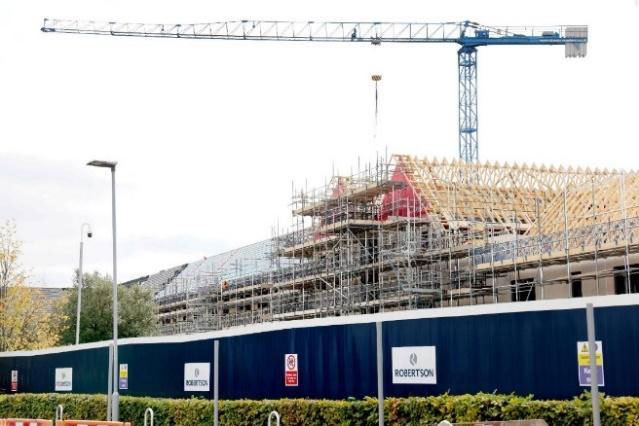

There has been progress on the construction of the Extra Care scheme on the former Lincoln Court site in Hebburn. When completed, 'Griffin Court' will comprise 20 two-bed and 75 one-bed affordable, high-quality homes, designed for those who have additional support and care needs to live independently. 17 of these will be specialist dementia-friendly apartments.
There has been progress on the construction of the Extra Care scheme on the former Lincoln Court site in Hebburn. When completed, 'Griffin Court' will comprise 20 two-bed and 75 one-bed affordable, high-quality homes, designed for those who have additional support and care needs to live independently. 17 of these will be specialist dementia-friendly apartments.
Other programmes include:
- Building works are progressing on the construction of a 3-storey extension at Mortimer Community College with part internal reconfiguration, to increase capacity and maximise efficiencies. The aim is to increase Pupil Admission Numbers from 1,050 to 1,200 by 2028.
Connected to jobs
Residents will have access to jobs, skills, and learning. They will have the skills and confidence to apply for a wide range of quality local jobs. These jobs will be in key and growing areas of employment and benefit all our Borough.
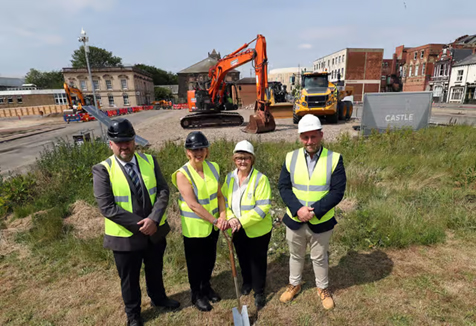
Work is continuing to relocate Tyne Coast College into South Shields Town Centre including the upgrade of the listed building on Barrington Street, the conversion of the former BT building into student accommodation and the development of units within the Readhead area to create additional dedicated college facilities.
Other programmes include:
- External funding from the North East Combined Authority to be utilised for carriageway resurfacing and various road safety initiatives to support the highways asset management plan.
- In partnership with Sunderland City Council, we are continuing to develop a joint strategic employment site, the International Advanced Manufacturing Park (IAMP), north of Nissan and west of the A19. The development is well underway with the new gigafactory battery plant making good progress with the potential to create 4,500 new high-value green jobs in the region by 2030.
- Jarrow Forward, a partnership of key organisations across Jarrow was established under the Pride in Place Programme to oversee a vision for the NE32 postcode area to create transformative opportunities for Jarrow residents. The vision draws on the town’s unique heritage - using its historic reputation for innovation, science, learning, industry and resilience to inspire and attract more people and investment to the town.
Part of strong communities
Residents will live in clean, green, and connected communities where they feel safe.
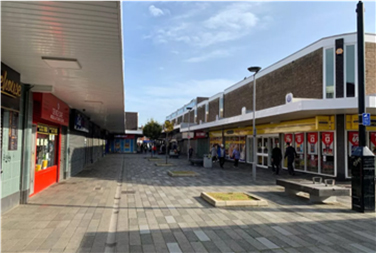
The Council continues its transformation of Holborn Riverside into a vibrant mix of new dwellings with completion of extensive remediation and civil engineering works on the site.
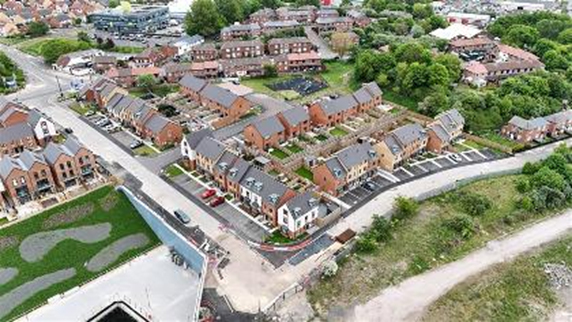
High quality family houses and apartments will be delivered in three phases across the Holborn site. The residential part of the development has full planning consent for 300 new homes, with high quality landscaping and a new riverside promenade for future public enjoyment.
Keepmoat Homes Ltd and Cussins (North East) Ltd will deliver a range of one to four-bedroomed houses and apartments. To address local need, 15% of these will be affordable homes, delivered in partnership with the Bernicia Housing Group. Around 185 dwellings are now complete and occupied, with work on the final residential phase starting in early 2026. This final phase will include construction of the new riverside promenade.
Other programmes that contribute towards this agenda and ambition include:
- Continued feasibility and master planning to deliver strategic investments interventions in Hebburn Town Centre, Parks and Riverside. Priorities to be looked at arising Our Hebburn Conversation – a consultation exercise which identified aspects and issues that residents wanted the Council to focus on.
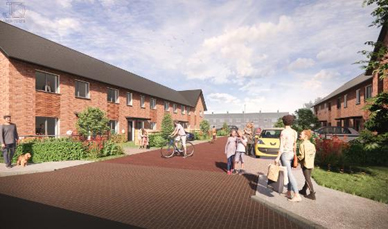
- Social Housing - A total of 36 new homes will be built across three schemes, all of which are for social rent. In Reynolds Avenue, South Shields, 17 ultra energy-efficient houses will be the first in the Borough designed, built and certified to the international 'Passivhaus Standard', helping to slash energy use and minimise carbon emissions. A further 12 homes will be built at Lizard Lane, Marsden, with a further 7 two-bedroom bungalows at Trent Drive, Jarrow.
- As part of our commitment to making South Tyneside a greener and cleaner place to live the Council along with the Office for Low Emissions and Connected Kerb have embarked on projects to upgrade and expand our electric vehicle charging infrastructure with a view to installing up to 2,000 units over a 20 year period.
- Using externally sourced funds to deliver the Stronger Shores project which aims to improve understanding of the coastal and flood protection value of marine habitats and their wider role in adapting to climate change and biodiversity management. This will test marine habitats for their coastal protection properties along the north-east coastline. The new approaches will involve restoring sub-tidal habitats, such as kelp beds, oyster reefs and sea grass along the north-east coastline.
- Bus Service Improvement Plan - The works involve realignment of the Abingdon Way / Witney Way and Abingdon Way / Didcot Way junctions. This will not only improve how the junction operates and reduce travel times, but it will also offer opportunities to enhance the infrastructure for pedestrians and cyclist schemes.
- The housing capital programme will ensure that homes we maintain are safe for our tenants, continue to meet decent homes standards and that they are compliant with all regulations whilst ensuring sustainability across the Borough. It will also support the building of new modern and energy efficient housing.
We want these things for every resident, so we are committed to:
Targeting support to make things fairer
We will target support at the residents and parts of our Borough that need it the most, reducing inequalities and making things fairer.
Programmes include:
- Continued investment in our five Community Area Forums (CAFs), each covering a particular area of the Borough. The role of CAFs is to discuss matters important to local people to provide a proactive service within local areas such as cleaner streets, reduced fly tipping, anti-social behaviour and tenancy related issues.
- Community improvements - This project will manage the current condition or manage improvements to sites to increase the site sustainability, safety and provide future development opportunities.
2026-31 Capital Programme
The provisional five-year Capital Programme for 2026-31 linked to the Council’s vision and ambitions is shown below. A breakdown of the individual projects within each year is detailed within the Capital and Investment Strategy at Appendix 4.
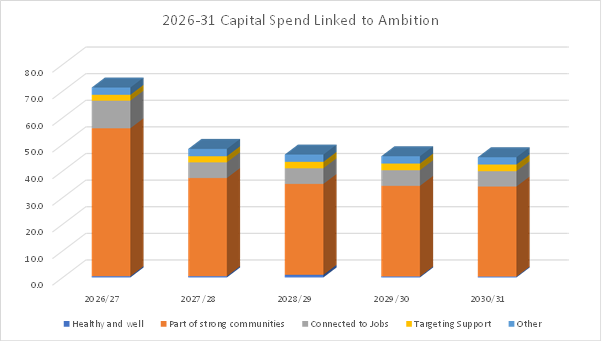
| Ambition | 2026/27 Gross (£m) | 2027/28 Gross (£m) | 2028/29 Gross (£m) | 2029/30 Gross (£m) | 2030/31 Gross (£m) |
|---|---|---|---|---|---|
| Healthy and well | 0.483 | 0.483 | 0.983 | 0.383 | 0.333 |
| Part of strong communities | 55.554 | 36.866 | 34.144 | 34.014 | 33.820 |
| Connected to jobs | 10.363 | 5.886 | 5.886 | 5.886 | 5.761 |
| Targeting support | 2.200 | 2.300 | 2.400 | 2.500 | 2.500 |
| Other | 2.750 | 2.750 | 2.750 | 2.750 | 2.750 |
The estimated funding of the five-year capital programme is shown below. A breakdown of each year is detailed in the Capital and Investment Strategy at Appendix 4.
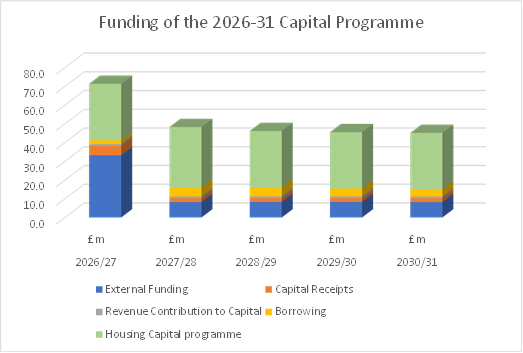
| Capital Programme By Funding | 2026/27 | 2027/28 | 2028/29 | 2029/30 | 2030/31 |
|---|---|---|---|---|---|
| £m | £m | £m | £m | £m | |
| Council General Fund Programme | |||||
| External Funding | 33.186 | 8.218 | 8.297 | 8.297 | 8.198 |
| Capital Receipts | 5.000 | 2.000 | 2.000 | 2.000 | 2.000 |
| Revenue Contribution to Capital | 1.000 | 1.000 | 1.000 | 1.000 | 1.000 |
| Borrowing | 2.041 | 4.858 | 4.758 | 4.128 | 3.858 |
| Housing Capital Programme | 30.123 | 32.209 | 30.108 | 30.108 | 30.108 |
Treasury Management
The Treasury Management and Annual Investment Strategy is a requirement of the Local Government Finance Act 1992, the Local Government Act 2003, the Local Authorities (Capital Finance and Accounting) (England) Regulations 2003, the Chartered Institute of Public Finance and Accountancy (CIPFA) Code of Practice on Treasury Management, the CIPFA Prudential Code for Capital Finance in Local Authorities and guidance on Investment Practice from the Ministry of Housing, Communities and Local Government.
It is a statutory requirement of the Local Government Finance Act 1992 that the Council produces a balanced budget. Section 31(a) of the Act requires a local authority to calculate its budget requirement for each financial year to include the revenue costs that flow from capital financing decisions. This means that increases in capital expenditure must be limited to a level whereby increases in charges to revenue from:
- • increases in all debt charges to include Minimum Revenue Provision caused by increased borrowing to finance additional capital expenditure, and
- • any increases in running costs from new capital projects are limited to a level, which is affordable within the projected income of the Council for the foreseeable future.
The Local Government Act 2003 requires the Council to set out its Treasury Strategy for borrowing and to prepare an Annual Investment Strategy.
The Local Government Act 2003 requires the Council to set out its Treasury Strategy for borrowing and to prepare an Annual Investment Strategy.
The management of the local authority’s borrowing, investments and cash flows, including its banking, money market and capital market transactions; the effective control of the risks associated with those activities: and the pursuit of optimum performance consistent with those risks.
The Treasury Management Strategy included at Appendix 7 to this report complies with the CIPFA Code, which requires the Treasury Management Strategy to be approved by Borough Council prior to the start of the financial year.
The Local Government Act 2003 also requires the Council to “have regard to” a further CIPFA Code called “The Prudential Code for Capital Finance in Local Authorities”.
The key objectives of the Treasury Management Code and the Prudential Code are to ensure, within a clear framework, that the capital investment plans of local authorities are affordable, prudent and sustainable and that Treasury Management decisions are taken in accordance with good professional practice.
To demonstrate that local authorities have fulfilled these objectives, the Treasury Management Code and the Prudential Code set out indicators that must be used and factors to be taken into account. The indicators and factors that apply to Treasury Management are contained in the Strategy attached at Appendix 7 to this report.
The Treasury Management Strategy and the Annual Investment Strategy have both been discussed and agreed with the Council’s Treasury Management Adviser, MUFG Pension & Market Services (MUFG).
The Council’s Treasury Management Strategy covers two areas:
- Part 1 – South Tyneside Consolidated Loans Fund – this covers the Council’s borrowings and contains the Treasury and Prudential Indicators required by the Treasury Management Code and the Prudential Code.
- Part 2 – Annual Investment Strategy – this concerns the investment of the cash balances of the Council. Priority is given to the security of the capital sum and the liquidity of investments.
Training
The CIPFA Treasury Management Code requires the responsible officer to ensure that members with responsibility for treasury management receive adequate training in treasury management. This especially applies to members responsible for scrutiny. On an annual basis the Council provides in person training available to all elected members on the treasury management framework and the Council’s treasury management activities.
Furthermore, pages 47 and 48 of the Code state that they expect “all organisations to have a formal and comprehensive knowledge and skills or training policy for the effective acquisition and retention of treasury management knowledge and skills for those responsible for management, delivery, governance and decision making.”
The scale and nature of this will depend on the size and complexity of the organisation’s treasury management needs. Organisations should consider how to assess whether treasury management staff and board/council members have the required knowledge and skills to undertake their roles and whether they have been able to maintain those skills and keep them up to date.
As a minimum, authorities should carry out the following to monitor and review knowledge and skills:
- Record attendance at training and ensure action is taken where poor attendance is identified.
- Prepare tailored learning plans for treasury management officers and board/council members.
- Require treasury management officers and board/council members to undertake self-assessment against the required competencies (as set out in the schedule that may be adopted by the organisation).
- Have regular communication with officers and board/council members, encouraging them to highlight training needs on an ongoing basis.
Appendix 1: Council Revenue Budget 2026/27
| Council Revenue Budget | Total Expenditure | Total Income | 2026/27 Budget | Staffing 2026/27 | |
|---|---|---|---|---|---|
| £ | £ | £ | No of Posts | FTE's | |
| Business and Resources | |||||
| Corporate Finance / Benefits and Customer Services | 50,605,650 | (21,084,880) | 29,520,770 | 60 | 55.0 |
| Digital & ICT Services | 7,786,060 | (1,115,080) | 6,012,820 | 106 | 90.0 |
| Procurement | 1,306,390 | (1,115,080) | 191,310 | 30 | 28 |
| Revenues, Benefits & Customer Services | 35,305,720 | (33,595,040) | 1,710,680 | 88 | 73.0 |
| Welfare Support | 1,115,590 | (408,300) | 707,290 | 27 | 24.0 |
| Corporate Assurance | 1,882,730 | (1,407,650) | 475,080 | 8 | 7.0 |
| People & Organisational Change | 4,350,680 | (2,094,770) | 2,255,910 | 90 | 87.0 |
| Culture & Leisure | 10,400,430 | (7,949,310) | 2,451,120 | 266 | 182.0 |
| Pensions Office | 246,905,000 | (246,905,000) | 0 | 117 | 108.0 |
| Total Business And Resources | 359,658,250 | (316,333,270) | 43,324,980 | 792 | 654.0 |
| Governance and Corporate Affairs | |||||
| Legal And Governance | 3,029,770 | (1,439,900) | 1,589,870 | 44 | 37 |
| Policy and Insight | 702,440 | (44,140) | 658,300 | 9 | 9.0 |
| Performance and Change Management | 1,010,780 | (512,800) | 497,980 | 25 | 22.0 |
| Communications, Engagement and Support Services | 5,490,700 | (1,166,490) | 4,324,210 | 103 | 93.0 |
| Total Governance and Corporate Affairs | 10,233,690 | (3,163,330) | 7,070,360 | 181 | 161.0 |
| Place Strategy | |||||
| Public Protection | 4,854,500 | (2,792,390) | 2,062,110 | 91 | 75.0 |
| Strategic Investment & Growth | 9,974,100 | (8,392,000) | 1,582,100 | 71 | 66.0 |
| Strategic Housing & Assets | 24,316,200 | (11,074,220) | 13,241,880 | 334 | 31.0 |
| Total Place Strategy | 51,416,200 | (24,140,140) | 27,276,060 | 528 | 345.0 |
| Community Operations | |||||
| Highways, infrastructure & Project Delivery | 13,919,560 | (12,875,160) | 1,044,400 | 162 | 157.0 |
| Operations | 11,518,860 | (8,6033,550) | 2,915,310 | 186 | 175.0 |
| Total Community Operations | 25,438,420 | (21,478,710) | 3,959,710 | 348 | 332.0 |
| Children's Social Care, Education, SEND and Inclusion | |||||
| Children and Families Social Care | 52,225,850 | (6,142,200) | 46,083,650 | 473 | 397.0 |
| Education, SEND and Inclusion | 50,989,680 | (31,502,340) | 19,487,340 | 592 | 398.0 |
| Total Children's Social Care, Education, SEND and Inclusion | 102,215,530 | (37,644,540) | 65,570,990 | 1,065 | 795.0 |
| Adult Social Care and Commissioning | |||||
| Adult Social Care | 136,862,240 | (54,259,480) | 82,602,760 | 377 | 328.0 |
| Commissioning and Quality Assurance | 1,615,410 | (676,000) | 939,410 | 27 | 26.0 |
| Total Adult Social Care and Commissioning | 138,477,650 | (54,935,480) | 83,542,170 | 404 | 354.0 |
| Public Health | |||||
| Public Health | 18,193,600 | (709,600) | 17,484,000 | 43 | 38.0 |
| Total Public Health | 18,193,600 | (709,600) | 17,484,000 | 43 | 38.0 |
| Schools Delegated | |||||
| Delegated Schools Budget | 136,007,231 | (136,007,231) | 0 | ||
| Total Schools Delegated | 136,007,231 | (136,007,231) | 0 | ||
| Total Council Revenue Budget | 842,640,571 | (594,412,301) | 248,228,270 | 3,361 | 2,679.0 |
Appendix 2: Reserves Policy
The requirement for financial reserves is recognised in statute by sections 32 and 43 of the Local Government Finance Act 1992. Councils must have regard to the level of reserves needed for meeting estimated future expenditure when calculating the budget requirement.
Reserves can be held for a variety of purposes such as to cushion the impact of unexpected events and emergencies or as a means of building up funds to meet known or predicted liabilities.
The principles used by the Chief Financial Officer (CFO) to assess and advise on the adequacy of reserves when setting the budget ensure that account is taken of the strategic, operational and financial risks facing the Council. This includes for example the Council’s record in budget and financial management, its capacity to manage in-year budget pressures and the current and projected external financial environment. Under the Local Government Act 2003, the CFO must report to Council on the adequacy of reserves. As an ultimate backstop, the CFO is required to report to all councillors under section 114 of the Local Government Finance Act 1988 in the event that reserves are seriously depleted and has the impact of suspending spending except to meet statutory obligations.
In accordance with good financial practice, the Council holds a number of reserves as below:
- Unearmarked General Fund Reserve
- This reserve is held to manage the impact of any unplanned overspends within the Council’s General Fund budget. The existing level of unearmarked reserves is projected to fall below the target minimum of £10m due to in-year spending pressures and therefore replenishment of this reserve is necessary and built into our financial planning.
- Various Earmarked Reserves
- These are held to meet expected and potential liabilities or specific investment requirements. Examples include emergency events such as unforeseen financial costs or dealing with a natural disaster, claims against our self-insurance fund, future payments due under PFI contracts, monies to support economic development, volatility within the Collection Fund which deals with the income and expenditure relating to council tax and business rates etc. It also includes reserves ringfenced by statute such as the reserves held on behalf of schools.
Appendix 3: Housing Revenue Account Service Charges
| 2025/26 Charge £/wk | Change % | 2026/27 Charge £/wk | ||
|---|---|---|---|---|
| Garage rents | £7.90 | 25.3% | £9.90 | |
| Tenant Heating Charges | Hebburn Newtown 1-bed | £5.30 | 3.8% | £5.50 |
| Hebburn Newton 2-bed | £14.30 | 3.8% | £14.80 | |
| Jarrow Energy tariff p/kwh | £0.14 | 3.8% | £0.15 | |
| 2025/26 Charge £/wk | Change % | 2026/27 Charge £/wk | ||
|---|---|---|---|---|
| Service Charges | Purpose built flats with scheme manager and communal facilities | £16.50 | 3.8% | £17.10 |
| Group dwellings with scheme manager and nearby communal facilities | £7.20 | 3.8% | £7.50 | |
| Guest Room Charges | Charges for overnight stay or emergency situations per night | £15.10 | 3.8% | £15.70 |
| 2025/26 Charge £/wk | Change % | 2026/27 Charge £/wk | ||
|---|---|---|---|---|
| Furniture options | New Tenancies supplied with a package of furniture and Electrical Goods - Option 1 Points up to 110 | £27.73 | 3.8% | £28.78 |
| New Tenancies supplied with a package of furniture and Electrical Goods - Option 2 Points up to 160 | £36.95 | 3.8% | £38.35 | |
| New Tenancies supplied with a package of furniture and Electrical Goods - Option 3 Points up to 200 | £46.14 | 3.8% | £47.90 | |
| New Tenancies supplied with a package of furniture and Electrical Goods - Mini Option Points up to 60 | £17.68 | 3.8% | £18.36 | |
| Decent Homes decant properties supplied cookers | £7.21 | 3.8% | £7.48 | |
| Caretaker Charges | 2025/26 Charge £/wk | Change % | 2026/27 Charge £/wk |
|---|---|---|---|
| Durham Court | £3.60 | 3.8% | £3.70 |
| Ellen Court | £9.10 | 3.8% | £9.40 |
| Monastery Court | £9.10 | 3.8% | £9.40 |
| Wilkinson Court | £9.10 | 3.8% | £9.40 |
| Concierge Charges | |||
| Durham Court | £12.80 | 3.8% | £13.30 |
| Ellen Court | £12.80 | 3.8% | £13.30 |
| Monastery Court | £12.80 | 3.8% | £13.30 |
| Wilkinson Court | £12.80 | 3.8% | £13.30 |
| Support Service Charges - Supporting People | 2025/26 Charge £/wk | Change % | 2026/27 Charge £/wk | |
|---|---|---|---|---|
| Community Alarms - Support | ||||
| Council Tenants | Standard - Hardwired or Solo Unit | £3.80 | 3.8% | £3.90 |
| Council Tenants | Enhanced - Hardwired or Solo Unit | £5.90 | 3.8% | £6.10 |
| Scheme Managers - Support | ||||
| Council Tenants | Scheme Managers - Support Services | £14.20 | 3.8% | £14.70 |
| Other Specific Service Charges | 2025/26 Charge £/wk | Change % | 2026/27 Charge £/wk |
|---|---|---|---|
| Council - HRA Temporary Accommodation | |||
| 1-bed accommodation | £32.40 | 3.8% | £33.60 |
| 2-bed accommodation | £45.70 | 3.8% | £47.40 |
| 3-bed accommodation | £66.50 | 3.8% | £69.00 |
| Tenants - Housing Plus Heating Charges | 2025/26 | 2026/27 | ||||
|---|---|---|---|---|---|---|
| Cost per property per wk. - Bed Sit | Cost per property per wk. - 1 Bed | Cost per property per wk. - 2 Bed | Cost per property per wk. - Bed Sit | Cost per property per wk. - 1 Bed | Cost per property per wk. - 2 Bed | |
| Davies Hall | £0.00 | £14.41 | £17.34 | £0.00 | £14.96 | £18.00 |
| McIntrye Hall | £0.00 | £16.04 | £0.00 | £0.00 | £16.65 | £0.00 |
| Birch Grove | £0.00 | £17.15 | £0.00 | £0.00 | £17.80 | £0.00 |
| Calf Close | £0.00 | £13.66 | £16.41 | £0.00 | £14.18 | £17.03 |
| Porlock House | £0.00 | £13.08 | £15.76 | £0.00 | £13.58 | £16.35 |
| Bishop Ramsey | £0.00 | £14.22 | £17.07 | £0.00 | £14.76 | £17.72 |
| Farding Lake | £0.00 | £13.49 | £0.00 | £0.00 | £14.00 | £0.00 |
| Prince Ed Court | £0.00 | £12.10 | £14.49 | £0.00 | £12.56 | £15.04 |
| Blenkinsop House | £8.33 | £9.25 | £0.00 | £8.65 | £9.60 | £0.00 |
| Borrowdale House | £0.00 | £9.44 | £0.00 | £0.00 | £9.79 | £0.00 |
| Huntcliffe House | £0.00 | £10.25 | £0.00 | £0.00 | £10.64 | £0.00 |
| Inskip House | £0.00 | £12.65 | £0.00 | £0.00 | £13.13 | £0.00 |
| Wingrove House | £0.00 | £12.56 | £15.15 | £0.00 | £13.04 | £15.73 |
| Clayside House | £0.00 | £10.83 | £0.00 | £0.00 | £11.24 | £0.00 |
| Glenthorpe House | £0.00 | £14.09 | £16.98 | £0.00 | £14.63 | £17.62 |
| Hallgarth House | £0.00 | £13.57 | £16.33 | £0.00 | £14.09 | £16.95 |
| Julius Court | £0.00 | £11.09 | £0.00 | £0.00 | £11.51 | £0.00 |
| Thomas Bell SA | £0.00 | £14.54 | £0.00 | £0.00 | £15.09 | £0.00 |
| Patrick Cain House | £0.00 | £11.26 | £13.57 | £0.00 | £11.69 | £14.09 |
| Leaseholders Management Fee | 2025/26 Charge £/wk | Change % | 2026/27 Charge £/wk |
|---|---|---|---|
| Freeze charge on Leaseholders Management Fee | £134.60 | 0.0% | £134.60 |
| 2025/26 Charge £/wk | Change % | 2026/27 Charge £/wk | |
|---|---|---|---|
| High Rise Properties | |||
| Durham Court | £2.00 | 3.8% | £2.10 |
| Mid Rise Properties | |||
| Dean Road | £3.50 | 3.8% | £3.60 |
| Laygate & Trinity | £3.40 | 3.8% | £3.50 |
| Whiteleas | £3.50 | 3.8% | £3.60 |
| Green Lane | £6.90 | 3.8% | £7.20 |
| Tyne Dock | £4.80 | 3.8% | £5.00 |
| Galsworthy Road | £3.50 | 3.8% | £3.60 |
| River Drive | £1.10 | 3.8% | £1.10 |
| Mowbray Road | £1.50 | 3.8% | £1.60 |
| Stewart and Fulwell | £1.00 | 3.8% | £1.00 |
| Sheltered Housing | |||
| Birch Grove SA | £8.80 | 3.8% | £9.10 |
| Bishop Ramsay SA | £9.90 | 3.8% | £10.30 |
| Blenkinsop House SA | £4.80 | 3.8% | £5.00 |
| Borrowdale House SA | £8.30 | 3.8% | £8.60 |
| Calf Close House SA | £6.90 | 3.8% | £7.20 |
| Cheviot House SA | £7.70 | 3.8% | £8.00 |
| Clayside House SA | £6.90 | 3.8% | £7.20 |
| Curren House SA | £11.40 | 3.8% | £11.80 |
| Davies Hall SA | £11.10 | 3.8% | £11.50 |
| Farding Lake SA | £8.10 | 3.8% | £8.40 |
| Fernyhough Hall SA | £6.40 | 3.8% | £6.60 |
| Glenthorpe House SA | £6.90 | 3.8% | £7.20 |
| Hallgarth House SA | £6.50 | 3.8% | £6.70 |
| Henley House SA | £8.40 | 3.8% | £8.70 |
| Huntcliffe House SA | £9.60 | 3.8% | £10.00 |
| Inskip House SA | £8.30 | 3.8% | £8.60 |
| Julius Court SA | £6.50 | 3.8% | £6.70 |
| Lincoln Court SA | £9.90 | 3.8% | £10.30 |
| McIntyre Hall SA | £8.60 | 3.8% | £8.90 |
| Patrick Cain House SA | £10.10 | 3.8% | £10.50 |
| Porlock House SA | £7.10 | 3.8% | £11.40 |
| Prince Edward Court SA | £11.00 | 3.8% | £11.40 |
| Thomas Bell SA | £7.80 | 3.8% | £8.10 |
| Wingrove House SA | £6.50 | 3.8% | £6.70 |
Appendix 4: Capital and Investment Strategy 2026-31
Please see Capital and Investment Strategy: 2026-2031
Appendix 5: Minimum Revenue Provision Policy Statement 2026-31
- Local Authorities are required by statute to make a charge to their revenue account to provide for the repayment of debt resulting from capital expenditure, known as Minimum Revenue Provision (MRP). The Authority is required to determine a level of MRP it considers to be prudent, whilst complying with regulation and having regard to Statutory MRP Guidance issued by the Secretary of State. In April 2024, MHCLG published a new Statutory Instrument along with amended Statutory Guidance on MRP, which applies to accounting periods from 2025/26 onwards. The main intent of the changes was to make explicit that capital receipts may not be used in place of the revenue charge and that excluding debt associated with certain types of assets is not allowed. This MRP policy has been revised to ensure compliance with the new regulations and Statutory Guidance.
- MRP on Supported Borrowing: For capital expenditure incurred before 1 April 2008 the Authority will apply the Asset Life Method. This methodology writes down the debt liability over a much shorter period than the regulatory method and is therefore deemed more prudent.
- MRP on Unsupported Borrowing: For capital expenditure incurred from 1 April 2008, the Authority will apply the Asset Life Method, whereby MRP will be based on the estimated life of the assets in accordance with the Statutory Guidance.
- The asset life is normally no more than 50 years. A longer life may be used if it is deemed by a professional that the asset life will exceed 50 years.
- MRP will commence in the year following the year in which capital expenditure financed from borrowing is incurred, except for assets under construction where the MRP will be deferred until the year after the asset becomes operational.
- For capital loans which are classed as non-commercial and have not been subject to a recognised credit loss in the current or any previous financial year the Council will provide MRP over the loan repayment period to match the loan repayment profile.
- For capital loans which are classed as commercial then the Council will provide MRP over the loan repayment period to match the loan repayment profile.
- Capital receipts received from loan repayments in the financial year will be used to reduce the debt liability on that loan i.e. the capital receipts will be used in lieu of MRP to reduce the CFR relating to that loan.
- Where capital receipts from loan repayments are not received in the financial year then MRP may be charged over the useful life of the assets purchased by the third party, unless the Council deems it appropriate to defer MRP until loan repayments commence.
- For capital loans to third parties granted before 7 May 2024 - where those loans have been subject to an actual or expected credit loss in the current or any previous financial year then MRP will be provided in each financial year over a maximum of the useful life of the assets purchased by the third party. MRP will commence in the current financial year.
- For capital loans to third parties granted on or after 7 May 2024 - where those loans are subject to an expected or actual credit loss, then the MRP charge will be at least the amount of the recognised credit loss for the financial year, after adjusting for any previous MRP or capital receipts applied to the loan.
- If considered prudent for a particular financial year, housing capital receipts from the sale of capital assets will be used to reduce the outstanding capital debt liability (CFR) and therefore reduce the MRP charge for later years. Capital receipts will not be used in lieu of a prudent charge to revenue.
- If considered prudent for a particular financial year, housing capital receipts from the sale of capital assets will be used to reduce the outstanding capital debt liability (CFR) and therefore reduce the MRP charge for later years. Capital receipts will not be used in lieu of a prudent charge to revenue.
- The MRP Guidance allows that any charges made in excess of the statutory MRP, i.e. voluntary revenue provision (VRP) or overpayments, can be reclaimed in later years if deemed necessary or prudent. For these sums to be reclaimed for use in the budget, this policy must disclose the cumulative overpayment made each year. The amount of VRP overpayments up to 31 March 2024 was £0m.
- The Council also determines that available resources for financing capital expenditure, such as capital receipts and external funding, will be applied to new expenditures in a manner that is considered appropriate in any financial year. For example, it will be considered financially efficient to apply such resources in the first instance to expenditures that have a shorter estimated lifespan.
Appendix 6: Equality Impact Assessment of Budget Proposals
Appendix 7: Treasury Management Strategy 2026/27
Please see Treasury Management Strategy 2026/27
Appendix 8: Pay Policy Statement 2026/27
Please see Pay Policy Statement
Appendix 9: Rent Setting Policy 2026
Please see Rent Setting Policy