South Tyneside Council Housing Services Sustainability Principles 2023-2028
Published June 2023 An accessible document from housing.southtyneside.gov.uk
Foreword
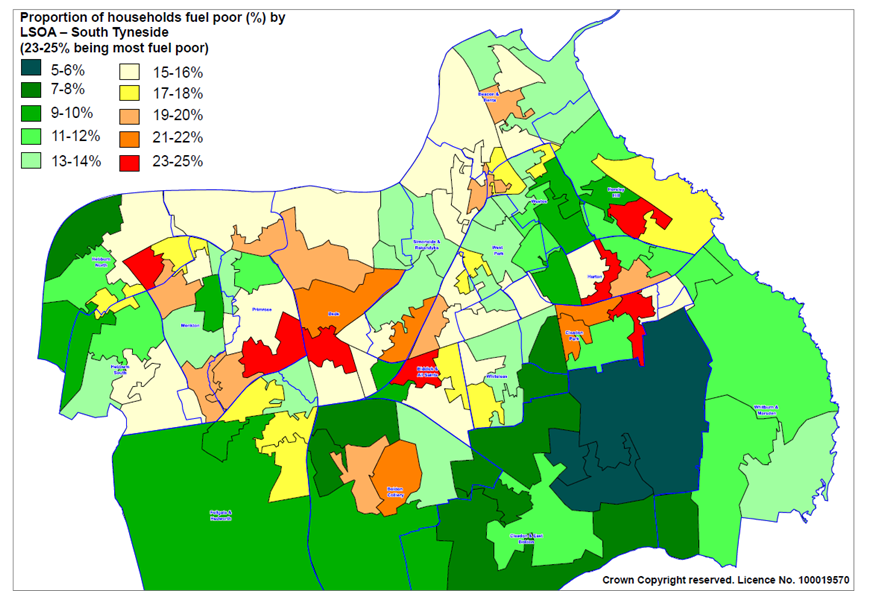
There are currently circa 16,500 homes in total, of which around 10,500 are considered to be in fuel poverty.
Staying warm and healthy is a priority for everyone. The rising costs of gas and electricity, brought on further following the global pandemic, COVID-19, has made it increasingly difficult for people across the UK to afford to heat their homes.
Due to recent fluctuating hikes in energy costs, means now, probably more than ever, affordable warmth is essential for every individual, regardless of age, household income or any other circumstance.
South Tyneside Council recognises fuel poverty across the Borough and is working towards eliminating it through working in partnership with other local organisations. It is for this reason that we have produced and put into effect our Sustainability Principles for 2023–2028.
We believe that a collaborative approach can help reduce the number of households currently in fuel poverty as well as prevent other households falling into it while maintaining a good standard of properties and ensuring homes are as warm, affordable, and sustainable as possible for future generations to come.
Our principles will help put our objectives into practice in a bid to eradicate fuel poverty and promote affordable warmth in South Tyneside.

What is fuel poverty?
The definition of fuel poverty
Fuel poverty is measured using Low-Income Low Energy Efficiency also known as LILEE which is defined as customers that spend more than 10% of their monthly income on energy bills and living in a property with an energy efficiency rating of band D or below.
Reasons why customers may find themselves in fuel poverty:
- Borrow money to be able to pay their energy bill and fall into debt
- Make sacrifices on lifestyle and necessary items such as food so that they have sufficient funds to pay their energy bills
- Use less energy that what is needed which can worsen any existing health problems as well as making them vulnerable to other cold-related illnesses

South Tyneside statistics
Approximately 3.16 million homes in England are in fuel poverty, this is expected to rise significantly to 8.4 million by April 2023.
Map 1. Provides a detailed illustration of fuel poverty of all households throughout the borough.
Health and housing
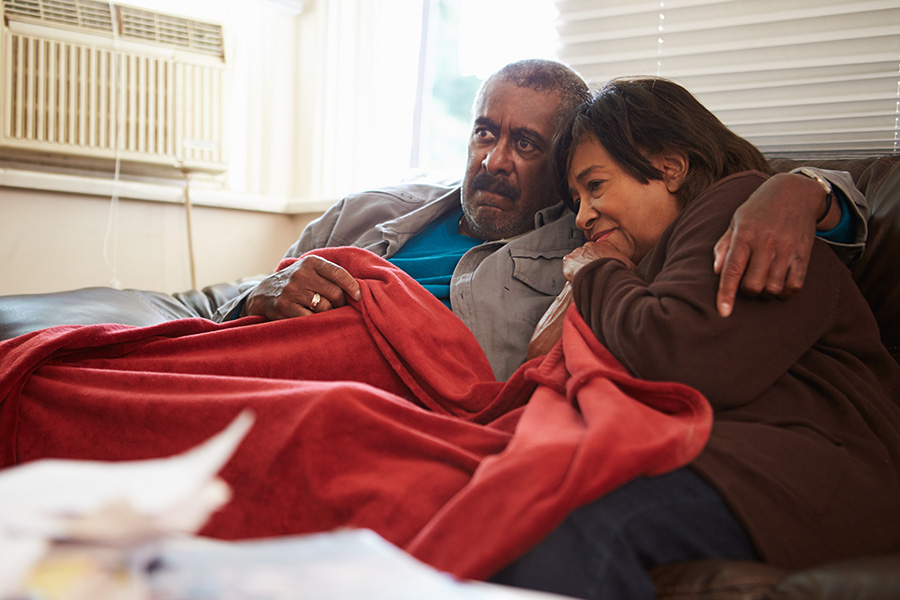
Living in a cold home can affect people of all ages from infants to adults.
Some examples of these affects are shown below:
- Asthma
- Chronic obstructive pulmonary disease (COPD)
- Emphysema
- Chronic bronchitis
- Pneumonia
- Arthritis
- Rheumatism
- Colds
- Flu
- Depression
- Stress and anxiety
- Suffer mental health problems
- At greater risk of underachieving at school
- 1.5 to 3 times more likely to suffer from a respiratory illness
- Risk of failing to gain weight due to the extra calories needed to keep warm and/or not eating enough due to food rationing
Tackling fuel poverty
How do you solve a problem like fuel poverty?
South Tyneside Council Housing Services have developed priorities to support the Sustainable South Tyneside Strategy.
We are collaborating with other organisations to increase the energy efficiency of homes through:
- Installing energy efficiency measures where possible
- Offering quality energy advice
- Support in the form of opportunities for tenants to exchange white goods, receive fuel vouchers and other great benefits through programmes such as Local Energy Advice Partnership (LEAP).
South Tyneside Council Housing Services will:
- Make energy efficiency resources and advice available to all customers; and that they receive the support they need
- Take the strategic decisions necessary to help alleviate fuel poverty and maintain a sustainable South Tyneside.
Energy efficiency ratings and why they matter?
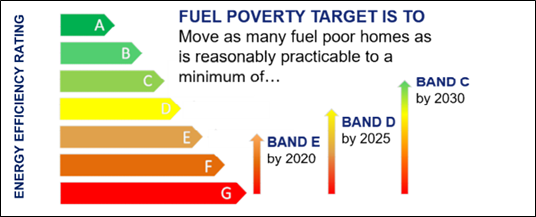
Energy Performance Ratings (EPR), also known as EPC ratings have become a way to determine the level of efficiency of a dwelling using a scale from A – G with A being the most efficient.
The UK government has set the targets in Figure 1. below to determine the efficiency of a dwelling with a requirement of moving as many fuel poor homes as possible to band C by 2030 (2035 for Social Housing providers)
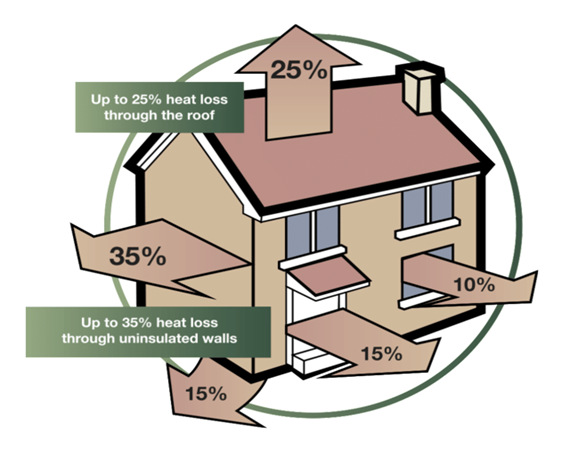
Every house type can lose different amounts of heat through various parts of the structure. Figure 2. above shows an example of common areas. However, the amount of heat lost and from where varies due to the building structure, house type and measures fitted such as the following:
Cavity wall insulation
Used to reduce heat loss by filling the air space inside of the wall with material that stops heat transfer. This captures the air within the cavity. Preventing heating loss and resulting in reduced heating costs.
Loft insulation
Reduces the movement of air upwards. The fibres of the insulation can also prevent trapped air from circulating and causing convection currents.
Entrance doors
Everyone has different types of front doors and therefore the advice given will not be the same for all, however, if you have a glass door or a door with windows you can hang a curtain over the pane to reduce heat loss as well as placing draught blockers along the bottom of the door.
Windows
Double glazing allows for air to be trapped between the windowpanes, reducing the thermal flow of hot and cold air and therefore reducing heat loss. Triple glazing creates get another gap for air to be trapped to increase the efficiency of heat loss and solar gain.
Flooring insulation
Adding insulation material beneath the floorboards, thereby reducing heat escaping through the floor into the ground, it also reduces the homes carbon emissions, increases comfort, and lowers energy bills.
The above energy efficiency measures are for educational purposes only and does not guarantee any works will be completed by South Tyneside Council Housing Services. Any South Tyneside Council owned properties identified for any future programmes will be subject to full survey and customers will be advised with notice.
South Tyneside Council Housing Services believes in the ‘Fabric first’ approach, which means that it is essential to insulate a home before adding or upgrading additional measures.
Carbon emissions and net-zero
Carbon emissions sometimes referred to as greenhouse gases are the major cause behind climate change particularly from fossil fuels (coal, gas), generating electricity and powering buildings.
At the moment, the world is producing more carbon emissions that it can handle, they get trapped within our atmosphere causing the temperature to rise. This rise in temperature can cause an increase in the following:
- Increased extreme weather events such as heatwaves and flooding
- Ecosystems becoming more vulnerable increasing risk of species loss
- Sea levels rising
- Oceans warming
- There has been a call to reach Net-Zero by 2050 in a bid to lower the Earth’s temperature by 2 degrees Celsius to help limit these adverse effects.
What is net-zero?
Net-Zero means striking a balance between the carbon emissions being emitted and those being removed. To be able to meet the global goal of reaching net-zero by 2050 we need to reduce our emissions going into the atmosphere and find new ways to reduce and remove our past, present, and future emissions.
What does Net-zero mean for South Tyneside?

In recent years South Tyneside has seen torrential rain close down streets, suspend metros and flood homes and businesses. This has led to a number of properties being fitted with flood prevention measures such as flood resistant windows, flood doors and pumps.
South Tyneside Council Housing Services is dedicated to creating a more sustainable South Tyneside with their Climate Strategy Action Plan.
The Council has outlined their commitment and how they are striving towards carbon neutrality across council buildings and operations by 2030 with the goals of reducing their carbon emissions by 25% by March 2023 and 50% by March 2025.
To help achieve these goals South Tyneside Council Housing Services have:
- Implemented and successfully maintained Environmental Management System ISO14001 for 12 years
- Introduced an electric fleet of vans to reduce the use of fossil fuels
- Increased education and partnerships with 3rd party organisations that can offer free impartial energy efficiency advice to our customers
What is ISO14001 and its benefits?
ISO14001 is an environmental management system which an organisation can use to enhance its environmental performance.
Enhanced environmental performance is achieved through more efficient use of the organisation’s resources and reduction of waste and costs. It also ensures compliance with any applicable laws, regulations, and other environmentally oriented requirements.
Three requirements to maintain the ISO14001 certifications are:
- Successfully pass an annual external audit
- Must develop opportunities for improvement year on year
- Have an environmental management system and environmental policy statement in place
Education and advice
We have recently partnered with 3rd party organisations who offer free energy efficiency advice, training and energy saving measures where possible to help our customers and staff. All of these services are completely free of charge for all customers. To date we have had a total of 86 people (staff and customers) that have benefited from free training opportunities and services provided by 3rd party organisations.
Training
Local Energy Advice Partnership (LEAP) referral scheme
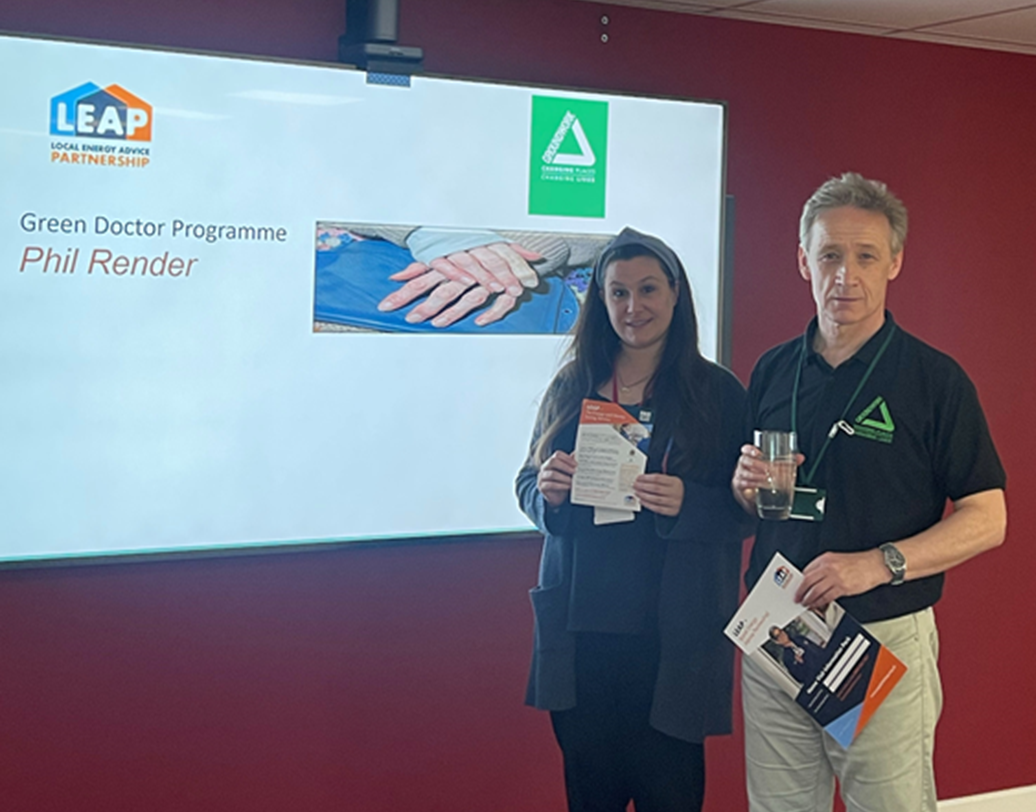
South Tyneside Council Housing Services staff completed training with a Green Doctor on the health impacts of living in a cold home and how to spot the signs of a home in fuel poverty to better help our customers.
LEAP can provide a range of free services to customers through their referral scheme for example exchanging of white goods to a more energy efficient model.
To find out more please visit: https://www.groundwork.org.uk/hubs/north-east-and-yorkshire/projects/
National Energy Advice (NEA) webinars and e-learning opportunities for staff and tenants
Funded places on courses through NEA have enabled staff and tenants to participate on a range of courses focusing on Energy efficiency, fuel poverty and health.
To find out more about available learning opportunities and courses offered by NEA please visit: https://www.nea.org.uk/
What are we going to do?
We believe that a collaborative approach with our partnerships with other organisations can help reduce the number of potential and current households in fuel poverty. Our collaborative approach will ensure that decency is maintained, and homes are warm, affordable, and sustainable for future generations to come.
Our strategic proposal
Objective 1: Ensure that all South Tyneside Council properties are energy efficient and affordable to heat
Objective 2: Ensure all South Tyneside Council platforms are free from damp and condensation
Objective 3: Raise awareness of affordable warmth and signpost customers to services who can provide help and advice on reducing energy use and fuel bills
Objective 4: Work closely with external partners to ensure we identify and maximise funding opportunities
Objective 5: Ensure all homes are energy rated at band C and above by 2035
Our Sustainability Principles will help put our objectives into practice in a bid to eradicate fuel poverty and promote affordable warmth in South Tyneside.
South Tyneside Council Housing Services believes its principle main objective is to ensure:
Every resident in South Tyneside has the ability to maintain a warm home at an affordable cost
This has been designed to fit with South Tyneside Council’s Fuel Poverty Strategy which provides a framework for a partnership approach to tackling the causes of fuel poverty, encouraging collective local action to address as many of these factors as reasonably practicable.
Our strategic plan focuses on the three main drivers of fuel poverty: Income, Fuel costs and Energy consumption.
Our involved tenants have been consulted, throughout customer forums, during the development of this plan. Their feedback and input have helped to shape our plan objectives.
Funding success
Most recently in 2022, South Tyneside Council Housing Services have recently completed the Green Homes Grant which saw £1.7million of Energy Efficiency improvements completed around the borough, this grant was match a match funded project provided by the department of Business, Energy and industrial strategy (BEIS).
Our other successful funding applications and housing capital budgets have allowed to successfully install the following measures to increase home energy efficiency over the last 5 years:
| Successful installations | Amount |
|---|---|
| Cavity wall insulations | 210 |
| Loft insulations | 688 |
| Roofs | 668 |
| Double glazing | 2174 |
| Triple glazing | 344 |
Bibliography and linked strategies
- South Tyneside Council Housing Services Customer Service Strategy
- South Tyneside Council Housing Services Risk Management Strategy
- South Tyneside Council Housing Services Equality, Diversity, and Inclusion Strategy
- South Tyneside Council Housing Services Complaints and Compliments policy
- South Tyneside Council Housing Services Repairs and Maintenance Policy
- South Tyneside Council Housing Services Environmental Policy Statement
- South Tyneside Council Housing Services Sustainable Energy Action Plan
- South Tyneside Council Housing Services Asbestos Policy
- South Tyneside Council Integrated Housing Strategy
- South Tyneside Council Tenancy Strategy
- South Tyneside Council Climate Change Strategy
- South Tyneside Council Health and wellbeing strategy
- South Tyneside Council Housing Services Company Plan
- South Tyneside Council Housing Services Delivery Plan
- South Tyneside Council Housing Services Asset Management Plan 2017 - 2022
- Home Energy Conservation Act (HECA)
- The coalition – Our programme for government
- South Tyneside Joint Strategic Needs Assessment (JSNA)